Government Prepares to Adjust Public Transport Fares Following Fuel Price Hikes


Kathmandu. The government is preparing to adjust vehicle fares. Following demands from transport entrepreneurs for fare adjustments due to rising petroleum prices, the Department of Transport Management has initiated the process to revise fares for public transport and freight vehicles.
According to Shrikanta Yadav, Director at the Department of Transport Management, an expert committee formed for fare review has completed its study and submitted its report to the Director General of the department. "We have conducted our study based on the market prices of fuel and other vehicle components," said Director Yadav. "The report has been submitted to the Director General, and based on this, fares will be adjusted using a scientific method."
The department formed a committee on 2082 Jestha 1 to adjust vehicle prices. This committee studied the market prices of lubricants, tires, and other spare parts and submitted its report to the Director General. Director Yadav informed that while there was a minor adjustment last year in Poush 2081 based only on fuel prices, the overall fare structure will now be scientifically adjusted based on the new report.
Currently, the conflict in West Asia has affected the international supply of petroleum products. Consequently, following price increases, Nepal Oil Corporation increased the price of petrol by NPR 15 per liter and diesel and kerosene by NPR 10 per liter starting from 2082 Chaitra 1. The corporation stated that the price hike in Nepal was necessary due to rising crude oil prices in the Gulf region caused by the war between the US, Israel, and Iran.
The corporation claims that adjusting prices has become challenging due to international market pressure and new price lists received from India. Immediately after the corporation raised prices, transport entrepreneurs demanded fare adjustments. Following protests from the Federation of Nepalese Transport Entrepreneurs, Nepal Truck Entrepreneurs Federation, and others, citing that fares have not been adjusted for four years, preparations are underway to revise vehicle fares.
Claim: Fares Not Adjusted for Four Years
Saroj Sitoula, Acting Chairman of the Nepal Transport Entrepreneurs National Federation, stated that the government has failed to fulfill its responsibility of adjusting fares for four years. He mentioned that a full adjustment has not occurred since 2078 BS and demanded an immediate revision of fares according to the scientific method of 2065 BS by the end of Chaitra. He emphasized the need to adjust fares for federal and provincial routes immediately, as the price hike directly impacts the transport business, which is fully dependent on fuel.
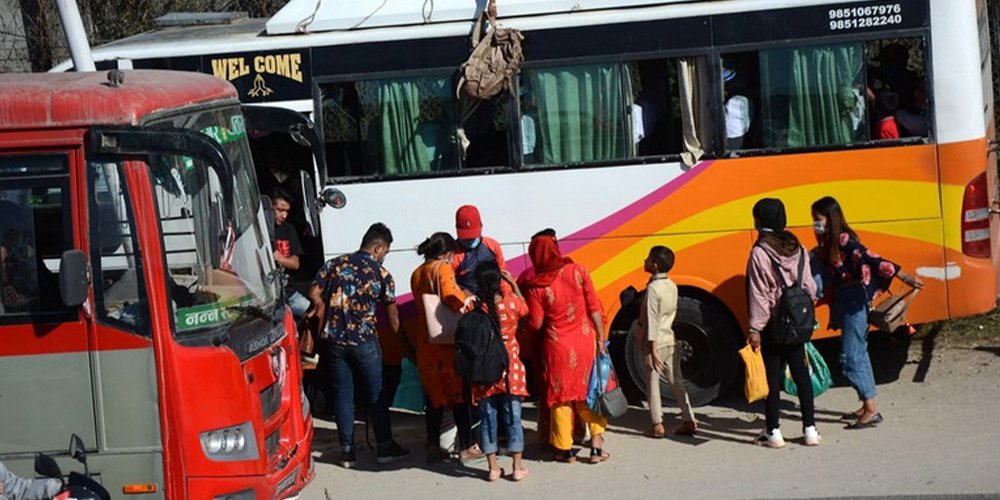
Acting Chairman Sitoula clarified that according to the scientific fare system implemented in 2065 BS, 65 percent of the share is based on vehicle cost, taxes, tires, and spare parts, while the remaining 35 percent is based on fuel prices.
"There should be an automatic system where fares decrease when fuel prices drop and increase when they rise," he said. "But the government has been withholding the adjustment that should be done every Chaitra for the past two years. Vehicles don't run on water, and the prices of tires and spare parts have skyrocketed," he added. "The government must clearly study market prices and adjust fares."
Fare adjustments generally occur in three ways: 10-year adjustment (based on 13 indicators), 2-year adjustment (done every two years), and automatic adjustment (done when petroleum prices fluctuate; in this case, 35 percent is based on petroleum and 65 percent on other parts and taxes, etc.). However, he claimed that adjustments have not been made since 2068 BS.
The Federation has already issued a statement demanding fare adjustments, and Sitoula warned that further steps would be taken if the government does not address the entrepreneurs' demands.
Fares for EV and Fuel Vehicles Should Be Different
The government adjusts fares for fuel-operated vehicles. However, electric vehicles (EVs) are often found to charge arbitrarily high fares, similar to fuel-operated vehicles. In this context, Chairman Sitoula stated that fares for electric vehicles (EVs) and fuel vehicles should be different. Sitoula argues that it is inhumane for EVs to charge higher fares when their operating costs are not affected by rising fuel prices. "I might be criticized by my fellow entrepreneurs for speaking the truth, but the government must create a separate scientific standard for electric vehicles," he said.
Furthermore, he suggested that the government implement a "odd-even" system for luxury private vehicles to conserve fuel and save foreign exchange.
Meanwhile, the Nepal Truck Transport Entrepreneurs Federation has also objected to the price hike, citing the conflict in the Gulf region as an excuse. Federation Chairman Rajendra Bikram Baniya expressed dissatisfaction that the written agreement between the department and the federation to automatically adjust fares when the price of petroleum products fluctuates by NPR 5 per liter is not being implemented. He stated that it is impossible for truck entrepreneurs to transport goods at the old rates when the price of diesel increases by NPR 10, and fares must be raised.
Admission: Fares Not Adjusted Since Four Years
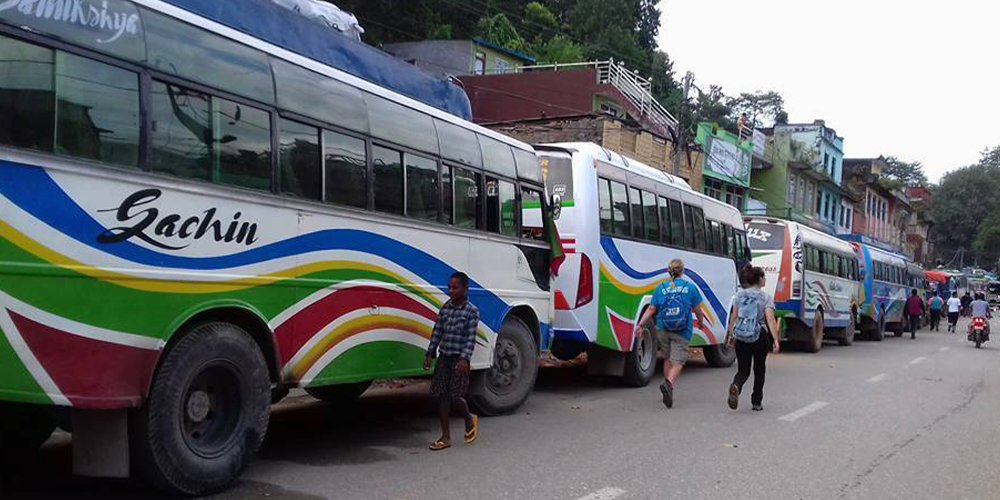
Director Yadav admitted that fares have not been adjusted since 2078 BS. He informed that a fare adjustment was made on 2081 Poush 22 based on fuel price increases since then.
Last year in Poush, fares for routes longer than 25 kilometers were increased. A maximum increase of 3 percent was applied to the old fare structure. Among these, passenger vehicles operating across two or more provinces saw a 3.30 percent increase. Freight vehicles operating on hilly routes saw a 0.81 percent increase, and those on Terai routes saw a 0.05 percent increase.
Similarly, the fare adjustment allowed deluxe service vehicles of any type to charge 20 percent more than the stipulated fare, and super deluxe vehicles could charge an additional 20 percent on top of the deluxe fare.
This specific news has been automatically translated by AI. As a result, there may be some inaccuracies or language errors.

_XMWxUklnsu.jpg)