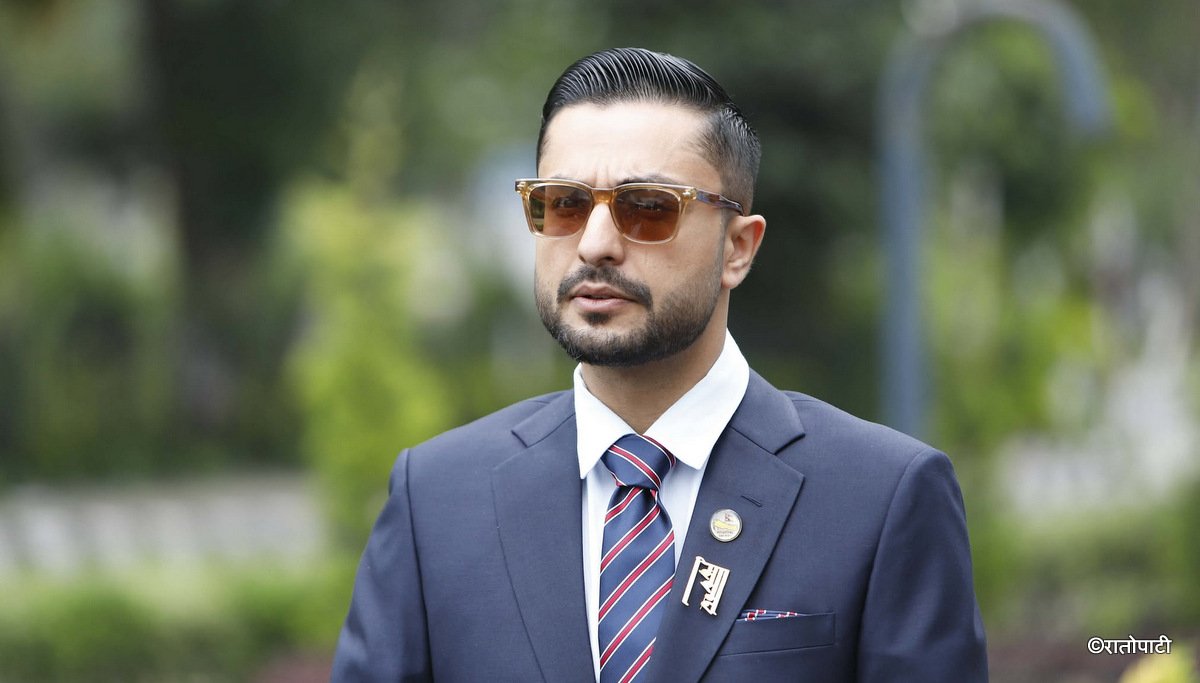
Controversy Erupts Over Appointment of PM's Aide as National Trust for Nature Conservation Chairman


Kathmandu. On Sunday, the Council of Ministers decided to appoint Adarsh Shrestha, who served as the Chief Personal Secretary to Prime Minister Sushila Karki, to the post of Chairman of the National Trust for Nature Conservation (NTNC). This decision has now become highly controversial.
There are primarily three reasons behind this decision becoming controversial. First, the abuse of power by the appointed individual. Second, the appointee's expertise in the relevant field. Third, the moral legitimacy of the government's decision. And fourth, his controversial history and background.
Adarsh Shrestha is the Prime Minister's Personal Secretary. This position holds the standing to directly interfere in decisions made by the Council of Ministers. This appointment sows the seeds of a 'conflict of interest,' which has been a major criticism leveled against previous governments. The fact that such a decision was made by a government formed on the foundation of the Gen-Z movement has made this even more contentious.
Shrestha, appointed as the NTNC Chairman, is not an expert in the relevant field. He was an employee at the assistant level in the Supreme Court and was considered a confidant of Chief Justice Sushila Karki. For this reason, he was appointed to the post of Chief Personal Secretary. The position of NTNC Chairman itself holds the status of a minister, and the fact that Shrestha lacks even the basic knowledge of this sector has made the appointment more controversial.
Moreover, elections have recently been held, and preparations for forming a new government are underway. In this situation, the government that was formed for the election has automatically become a caretaker government. The government making an appointment for a five-year term in this state raises a moral question. One might ask what difference it would have made if the government had made this appointment ten days later. The current decision by the government is being viewed as an abuse of authority.
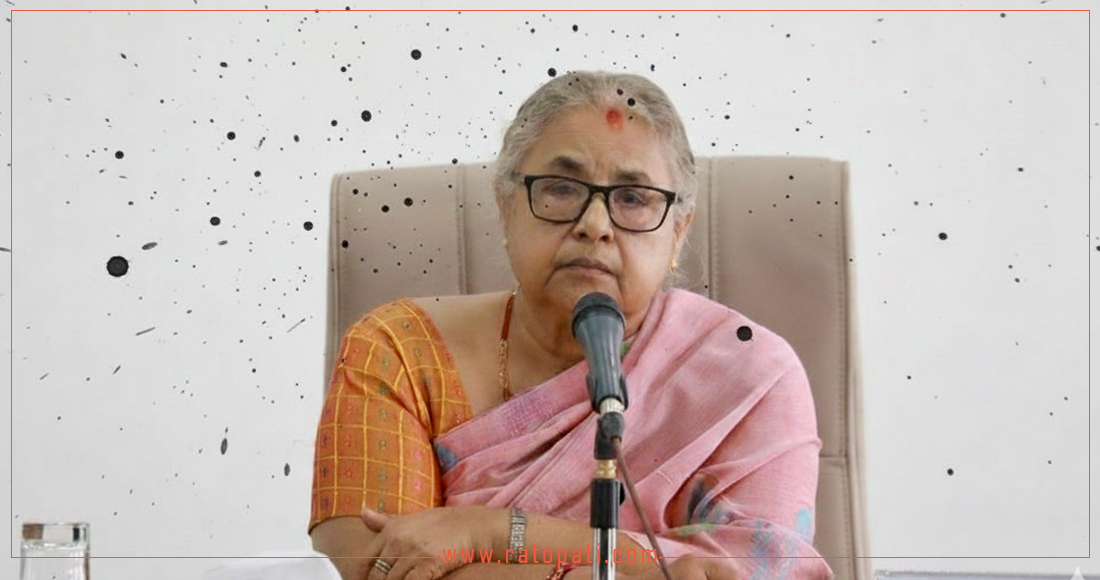
Furthermore, questions have previously been raised about Shrestha's work style. Allegations have been made against him regarding appointing family members to the Prime Minister's secretariat and engaging in unusual maneuvering in various government appointments. However, Prime Minister Karki not only continued his responsibilities but also named him in a recent interview as the person who supported her the most.
On the same Sunday, the Council of Ministers also decided to appoint the current Home Minister, Omprakash Aryal, as an expert member to the vacant seat in the National Assembly. Although this decision is also controversial, it did not generate as much controversy as the appointment of Shrestha. The reason is that while this decision involved a conflict of interest and raised moral questions about the government's decision, the controversy was less severe based on Aryal's expertise and image.

Why is the NTNC Appointment Consistently Controversial?
The controversy surrounding the appointment of the NTNC Chairman is not new. The ambiguity in the interpretation of the Chairman's appointment and qualifications, stemming from the weak laws established during the monarchical era, and the unnecessary authority concentrated in the Chairman's office, have repeatedly made this appointment controversial.
The 'Mahendra Nature Conservation Fund Act' established in 2039 BS provided for the appointment of a member of the royal family as the Chairman. At that time, the King served as the Patron of the Fund, and the King could appoint anyone he wished as Chairman, who in turn could bring anyone he wished onto the board and appoint the Member-Secretary accordingly, granting him unlimited responsibilities. Accordingly, the King would appoint one of the princes. Those appointed managed their respective organizations.
Following the People's Movement of 2062/63 BS and the establishment of democracy, the organization's name was changed to the 'National Trust for Nature Conservation' (NTNC). The responsibility of the Chairman was given to the Prime Minister, while the rest of the provisions remained unchanged.
Initially, there was a practice of the Prime Minister assigning the Chairman's responsibility to the Minister of Law, but in 2078 BS, then-Prime Minister KP Sharma Oli broke this tradition. Instead of making the then-Forest Minister Prem Ale the Chairman, he appointed Krishna Prasad Oli. However, when Oli was recommended for an ambassadorship in 2081 BS, the post automatically became vacant. Oli corrected the previous decision and appointed the Forest Minister as the NTNC Chairman.
After the Gen-Z movement, the government was dismissed, and a new government was formed. After the new government was formed, Prime Minister Sushila Karki herself served as the Forest Minister for some time. During this period, the term of the NTNC Member-Secretary, Dr. Naresh Subedi, was nearing its end. Subedi, who had successfully influenced Ain Bahadur Shahi while serving as Forest Minister, is accused of violating the convention by having Shahi, who was appointed ex-officio, reappointed.
It appears that the government recently forced Shahi to resign as Chairman under pressure and gave the new appointment to Shrestha. Shahi himself admits that he resigned voluntarily from the NTNC Chairmanship. Shahi says, 'I resigned after consulting with the government so that it would be easier for them.'
Former Member-Secretary of the Trust, Saroj Adhikari, states that the convention of the Forest Minister being the ex-officio member is the most suitable option, as the Forest Minister has traditionally held the Chairman's post. He suggests that even though the Oli government broke the tradition of the Forest Minister chairing the post, the government should not take the wrong path again now that things are back on track.
Senior officials at the Trust state that the current problem is recurring because the government has kept the laws from the monarchical era intact and has not redefined the qualifications and authority of the Chairman. However, former Member-Secretary Adhikari believes that this is a problem of intent rather than law. Adhikari says, 'If the intent is clean, it is not a problem of law; the law alone cannot stop things if the intent is not right.'
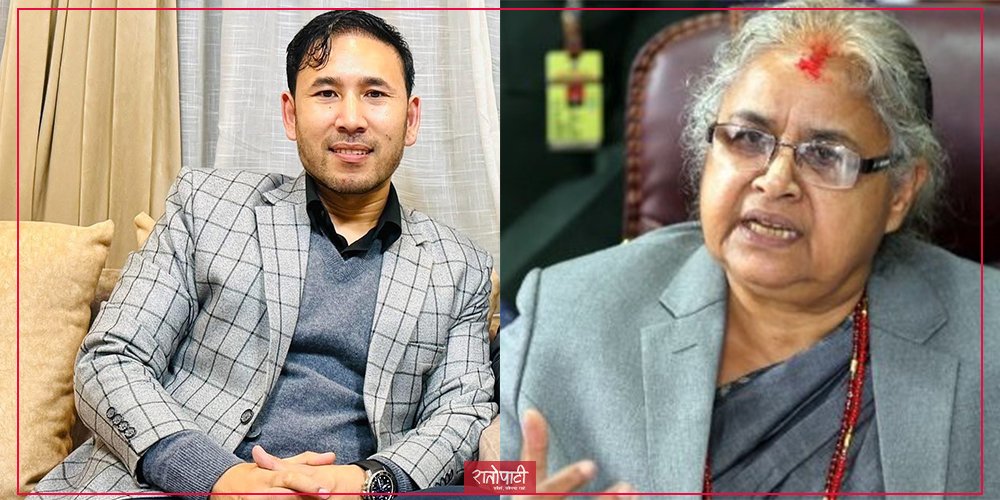
Why is the NTNC Chairman Post Attractive?
Generally, the role of a chairman in any organization where the chief executive is a different position is limited, primarily to the decision-making process. However, the NTNC Chairman holds unlimited authority.
The National Trust for Nature Conservation Act of 2039 BS stipulates that the Chairman, appointed by the Prime Minister (who is the Patron), has the authority to make appointments to the entire Board of Directors, including the executive head serving as the Member-Secretary, through a single decision. This Board of Directors can include three secretaries from the Government of Nepal, representatives from international organizations, and officials from national non-governmental organizations.
In other words, the Chairman has the standing to influence government officials as well as national and international non-governmental organizations. Furthermore, the service and facilities for the Chairman are quite attractive. A budget exceeding NPR 2.5 million annually is allocated just for the Chairman. In addition, facilities such as a vehicle, driver, and fuel are provided. For foreign travel, air tickets, full expenses based on bills, and daily allowances are also provided. The trip to Norway made by Shahi while he was the Forest Minister was controversial for this very reason.
The Trust's annual budget is nearly NPR 1.5 billion. The Chairman has an executive role in spending this budget. A provision exists where expenditures exceeding NPR 10 million can be approved by the Chairman. It appears that Adarsh wants to secure this post to avail good facilities, influence officials from the government and NGOs/INGOs, and expand his network.
Gen-Z activists have taken to the streets in protest against this decision. However, the decision made by a government formed on the agenda of good governance, while it is on its way out after peacefully concluding the elections, has tarnished its reputation by disregarding its own foundational principles.
This specific news has been automatically translated by AI. As a result, there may be some inaccuracies or language errors.


_D3S1FVBVJi.jpg)