Madhesi Parties Reduced to Zero Seats in Latest Federal Elections After Decades in Parliament

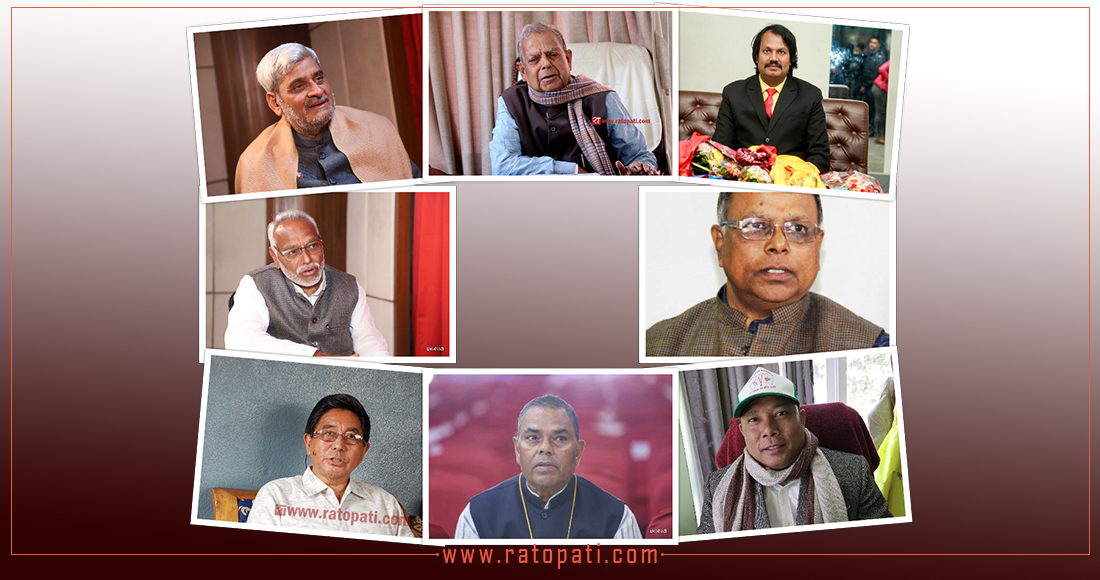
Kathmandu. Madhes-centric parties have been reduced to zero in this term's House of Representatives elections. No Madhes-centric party managed to win even a single seat in the election, nor did they cross the threshold in the proportional representation category. The security deposits of most leaders who contested in the direct elections were forfeited.
The Janata Samajbadi Party Nepal (JSPN), considered the main Madhes-centric party, secured only 182,285 votes in the proportional representation category. This is below the threshold. Dr. C.K. Raut-led Janmat Party received 79,435 votes. The JSP led by Ashok Rai, the Rastriya Mukti Party Nepal, and the Nagarik Unmukti Party Nepal, for which Resham Chaudhary is the patron, contested under a single election symbol but collectively secured only 62,069 votes in the proportional representation. The Nepal Sadbhavana Party garnered 2,018 votes.
Rise of Madhes in 2048 BS
This marks the first time in the parliamentary political journey of Madhes-centric parties, which began in 2048 BS following the general election after the 2046 People's Movement, that such a break has occurred, leaving them in a state where advancing seems impossible in the current situation. None of the parties, including Janata Samajbadi Party Nepal, Janmat Party, Nagarik Unmukti Party, and Rastriya Mukti Party Nepal, managed to win a single seat.
In the 2048 BS election held after the 2046 People's Movement, the Nepal Sadbhavana Party won 6 seats. Gajendra Narayan Singh had formed the new party. The party won 6 seats in its very first election contest after its formation.
The Madhesi party, Nepal Sadbhavana Party, entered parliament for the first time by winning one seat each from Kapilvastu and Saptari, and two seats each from Nawalparasi and Rupandehi. Gajendra Narayan Singh won the election from Saptari Constituency No. 2, while Hridyesh Tripathi won from Nawalparasi-3, Trijuginarayan Chaudhary won from Nawalparasi-4, Santaprasad Chaudhary won from Rupandehi-4, Shyamsundar Gupta from Rupandehi-5, and Mirza Dilsad Beg was elected from Kapilvastu-3.
The parties that went to make the constitution got entangled in the game of power. The government led by then-Maoist Chairman Prachanda fell after the Rukmangad Katuwal incident. Subsequently, a dispute arose over who would join the next government, leading to the division of the Forum. Vijay Kumar Gachhadar separated from there, taking a majority of the MPs with him.
At that time, the Nepal Sadbhavana Party fielded candidates in 84 constituencies nationwide but won only 6 seats. Bikash Tiwari, a leader of the Nepal Sadbhavana Party at the time, says, ‘Those six seats were very significant for the Madhes; entering parliament for the first time with the Madhes agenda from a Madhesi party was like a celebration for the Madhes.’
It was then that issues concerning dhoti, kurta, Hindi language, citizenship, and language were raised in parliament, issues that continue to be raised even today. He notes that this was the starting point for bringing the Madhes issue to the state's organs, which seems to have concluded in this election of 2082 BS. Bikash Tiwari, now a leader of the Rastriya Mukti Party Nepal, suggests that falling to zero seats is also an opportunity for the Madhes.
Decline in 2051 Mid-term, Increase in 2056
In the mid-term election held in 2051 BS, the Nepal Sadbhavana Party shrank from 6 seats to three. It won two seats in Saptari and one in Nawalparasi. Gajendra Narayan Singh won from Saptari-2, Anish Ansari from Saptari-3, and Hridyesh Tripathi won from Nawalparasi-3. In the 2056 election, the Nepal Sadbhavana Party increased its seats again.
Bharat Bimal Yadav, a former leader of the Nepal Sadbhavana Party, states that the Nepali Congress had a strong hold in the Madhes at that time. Even in such a situation, the Sadbhavana used to win 5-6 seats, according to him.
Uprising After the Madhes Movement
The Madhesi Janadhikar Forum Nepal, which emerged leading the Madhes Movement in 2063 BS, brought about a major uprising in the Madhes. Following this, the Terai Madhes Loktantrik Party was born, and the Nepal Sadbhavana Party split, forming the Sadbhavana Party under the leadership of Rajendra Mahato. The Madhes Movement was led jointly by the then Forum Nepal, TMLP, and Sadbhavana Party.
In the Constituent Assembly election held after the 8-point agreement in Falgun 2064 BS, the then Forum led by Upendra Yadav won 30 seats in the direct elections alone. TMLP won 9 seats, and the Sadbhavana Party won 4 seats. Including proportional representation, Madhes-centric parties secured 81 seats in the Constituent Assembly. Forum Nepal alone had 52 seats.
Power Maneuvers
The parties that went to make the constitution got entangled in the game of power. The government led by then-Maoist Chairman Prachanda fell after the Rukmangad Katuwal incident. Subsequently, a dispute arose over who would join the next government, leading to the division of the Forum. Vijaykumar Gachhadar separated from there, taking a majority of the MPs with him.
Later, when the government was about to be formed under the leadership of then-Maoist leader Dr. Baburam Bhattarai, the Forum led by Upendra Yadav split. From there, Jayprakash Gupta separated with a majority of MPs and formed the Madhesi Janadhikar Forum Democratic. Not just Forum Nepal, but the TMLP led by Mahantha Thakur also split during that time. Mahendra Ray Yadav separated and formed TMLP Democratic.
Anil Jha formed the Federal Sadbhavana Party, separating from the Sadbhavana Party led by Rajendra Mahato. Ram Naresh Ray Yadav formed the Rastriya Madhes Sadbhavana Party, separating from the Sadbhavana Party. The reason for the splitting of these parties was power; splitting a party meant getting a ministerial position in the government.
The consequences of this were seen in the second Constituent Assembly election in 2070 BS. The Forum, which won 30 direct seats in 2064 BS, won only two seats. It became a 10-seat party by securing 8 seats in proportional representation. The Forum Loktantrik, which separated from Forum, won four direct seats and 10 proportional seats, totaling 14 seats. The Sadbhavana Party, which won four seats in 2064 BS, won only one seat in 2070 BS. After securing 5 seats through proportional representation, it became a party of 6 MPs in parliament.
After the 2070 elections, Madhesi parties did not join the government. It is not that they did not try to join the government, but the coordination with the then-government did not align. Following this, Madhesi parties started protests demanding the inclusion of their demands in the constitution. The protests by Madhes-centric parties, sometimes in Kathmandu and sometimes in the Madhes, even led to a blockade in the country.
The TMLP, which won 9 seats in 2064 BS, won 4 direct seats and 7 proportional seats in 2070 BS, becoming an 11-seat party. The Terai Madhes Sadbhavana Party, formed by splitting from TMLP, won 1 direct seat and 2 proportional seats, totaling 3 seats.
The then Federal Sadbhavana Party led by Anil Jha, formed by splitting from the Sadbhavana Party, failed to win any direct seats but secured one seat in proportional representation. Anil Jha made his wife an MP. The Madhesi Janadhikar Forum Democratic led by Rajkishor Yadav, which separated from the Forum, also won one seat in proportional representation. Rajkishor Yadav also made his wife Sarita Yadav an MP.
The then Rastriya Madhes Samajbadi Party, formed by Sharatsingh Bhandari splitting from the Forum Loktantrik led by Vijaykumar Gachhadar, did not win any direct seats but secured three seats in proportional representation. In essence, in the 2070 Constituent Assembly, all Madhesi parties combined were limited to 49 seats, including proportional representation, whereas they had won 81 seats in 2064 BS.
Heat of the Movement
After the 2070 elections, Madhesi parties did not join the government. It is not that they did not try to join the government, but the coordination with the then-government did not align. Following this, Madhesi parties started protests demanding the inclusion of their demands in the constitution. The protests by Madhes-centric parties, sometimes in Kathmandu and sometimes in the Madhes, even led to a blockade in the country.
The then main three parties—Congress, UML, and Maoist—agreed to draft the constitution through a fast-track process. The Forum Loktantrik led by Vijaykumar Gachhadar also supported this. Other Madhes-centric parties remained in protest. Amidst the ongoing protests, the constitution was promulgated in Ashoj 2072 BS.
Following this, Madhesi parties resumed protests demanding constitutional amendments. During the protests, various parties merged. The Forum led by Upendra Yadav unified with the Nepal Federal Socialist Party led by Ashok Rai. The Forum merged with the Nepal Sadbhavana Party. Later, six parties merged to form the Rastriya Janata Party Nepal.
Progress Made in 2074 BS
In the 2074 BS elections, the Samajbadi Forum and RJP Nepal won 21 direct seats combined. The then RJP led by Mahantha Thakur alone won 11 seats. The Samajbadi Forum won 10 seats. Vijaykant Karna, an expert on Madhes political affairs, says, ‘Madhesi parties achieved good results in 2074 BS because they remained continuously in protest after the 2070 elections, rather than joining the government.’
He points out the fact that Madhesi parties performed poorly in elections when they engaged in power politics and achieved good results when they remained outside power and protested. He states that after the 2064 election, engaging in power politics ruined the parties in 2070 BS, but protesting without joining the government in 2070 BS brought good results in 2074 BS.
After the 2074 elections, Madhes-centric parties fully engaged in the game of power. The Samajbadi Forum formed the government in Madhes Province. It participated in the governments of Lumbini Province and Koshi Province. Upendra Yadav himself joined the central government. RJP also participated in the governments of Madhes Province and Lumbini Province.
After the elections, both parties engaged in the race for power. After some time, following a 'dispute' between then-Prime Minister KP Sharma Oli and Forum Chairman Upendra Yadav over the issue of constitutional amendment, the Forum withdrew from the government. Before leaving the government, Upendra Yadav had formed the Samajbadi Party by merging with the Naya Shakti Party led by Dr. Baburam Bhattarai.
After withdrawing from the government, the Samajbadi Party led by Upendra Yadav and the RJP Nepal led by Mahantha Thakur merged to form the Janata Samajbadi Party Nepal (JSPN). However, due to power disputes, that unity did not last long. A dispute arose within JSPN after leaders from the Mahantha Thakur faction joined the government led by the then Prime Minister whom Upendra Yadav had left.
Decline in 2079 BS
When then-Prime Minister KP Sharma Oli promised to fulfill all demands of the Madhes, leaders including Rajendra Mahato, Rajkishor Yadav, and Laxman Lal Karna participated in the government. Upendra Yadav, chairman of JSPN, started taking action against those who joined the government, leading to a party split. Mahantha Thakur formed the Loktantrik Samajbadi Party (LSPN). LSPN and JSPN contested the 2079 elections. JSPN won 7 direct seats, while LSPN won 2 seats. Dr. C.K. Raut-led Janmat Party won 1 direct seat. Combined, the three parties won 10 direct seats in the Madhes, whereas they had won 21 seats in the 2074 elections. LSPN could not even become a national party. In the proportional representation category, JSPN won 5 seats and Janmat won 5 seats.
Many analyze that the public in Madhes were fed up with the power struggle in Madhes Province, even during the 'Jyanji' movement, and the impact of this was seen in the elections held on Falgun 21.
Even after the 2079 elections, the race for power continued. After the election, JSPN initially led the Madhes Province government, but after the coalition changed at the center, the Janmat Party took power. Janmat Party was also involved in the federal government and participated in the Lumbini Province government.
JSPN remained in the central government even after separating from the provincial government. Due to this power struggle, JSPN split. Ashok Rai separated and formed JSP, which went into the government. JSPN remained outside the government but never gave up the ambition to join the power structure.
Following the 'Jyanji' movement on Bhadra 23 and 24, the Janmat Party left the Madhes Province government, and a government was formed under the leadership of Jitendra Sonal of the then LSPN, with support from JSPN. However, disputes over the vote of confidence led to a disgusting power tug-of-war in Madhes Province. Saroj Yadav of the UML became the Chief Minister after taking an oath in a hotel.
The appointment and oath-taking dispute of the Chief Minister reached the Supreme Court. After the Supreme Court invalidated the appointment of Saroj Yadav, the Congress party took the leadership of the Madhes government. In other words, many analyze that the public in Madhes were fed up with the power struggle in Madhes Province, even during the 'Jyanji' movement, and the impact of this was seen in the elections held on Falgun 21.
This specific news has been automatically translated by AI. As a result, there may be some inaccuracies or language errors.