Post-Election Focus Shifts to New Government Formation and Cabinet Size Debate

Kathmandu. With the elections concluded, preparations for forming a new government have begun. The Election Commission has instructed political parties to submit the list of candidates elected under the Proportional Representation system.
Meanwhile, the Rastriya Swatantra Party (RSP), which secured near two-thirds majority in the elections, is preparing to amend the existing provisions regarding the selection of the parliamentary party leader to appoint senior leader Balendra Shah (Balen) as the leader, as per the previous agreement.
On another front, there is growing interest and discussion about who will become a minister in the upcoming government. Discussions are ongoing, from party levels to the general market, regarding the size of the cabinet, the number of ministries to retain, and the selection of individuals for ministerial roles.
Party leaders indicate that discussions are progressing with the aim of finalizing most ministries at the time of the Prime Minister's appointment, while internally shortlisting potential individuals capable of running the ministries.
As the government formation process moves forward, there is also curiosity about how many ministries the new government will maintain. Although the Constitution mandates that the cabinet cannot exceed 25 members, there are currently 22 ministries. In the previous government, there was a practice of appointing the remaining three state ministers. The interim government, however, limited the cabinet size to no more than 15 members by assigning one minister responsibility for two or more ministries.
This time, however, the RSP has made it an agenda in its manifesto to keep the number of ministries at no more than 18. If this provision is implemented, the new government will have to merge the functional areas of 4 of the current 22 ministries into others. There is interest in what the RSP will do in this situation.

However, there has been no formal discussion within the RSP yet regarding which ministries to merge and how to manage them. RSP leader Ganesh Parajuli states that while the committee responsible for drafting the manifesto might have discussed various options, there has been no formal discussion on this matter within the party yet.
"We formed a committee under the leadership of Vice-Chairman Dr. Swarnim Wagle to prepare the manifesto. The party adopted the document prepared by that committee and created a 100-point manifesto," Parajuli says. "Our agenda to have only 18 ministries will be implemented, but how to manage the ministries has not been formally discussed in the party's official mechanism."
A member of Balen's secretariat, however, suggests that implementing 18 ministries immediately may not be easy. "It is difficult to manage ministries according to the team structure right now. The intention is to reduce them, but it is not easy; there are many aspirants. Therefore, I don't think they will be reduced right now," says the member. He adds that since the Balen-led government will need to show results, reducing the number of ministries might affect performance.
Ministry Management is Not Easy
Although the 22 ministries at the federal level appear numerous in count, their functional areas often seem burdensome. Apart from ministries with clearly defined jurisdictions like the Prime Minister's Office, Finance, Home Affairs, Foreign Affairs, Defense, and Communications and Information Technology, the functional areas of other ministries do not always align well. Some ministries have overlapping jurisdictions, while others have very diverse functions.
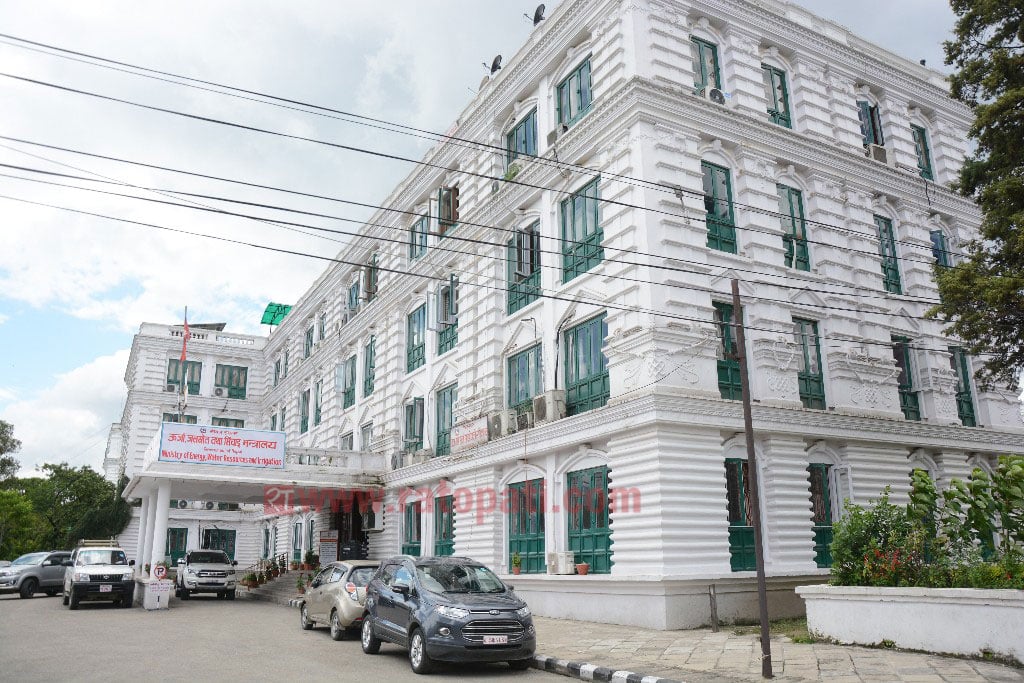
Specifically, while the functional areas of the Ministry of Energy, Water Resources, and Irrigation appear similar, water resources and irrigation are interrelated with the Ministry of Agriculture and Livestock Development. Furthermore, there is an overlap in jurisdiction between the Ministry of Water Resources and the Ministry of Drinking Water.
The Ministry of Physical Infrastructure and Urban Development, in particular, has many tasks of a similar nature. The Ministry of Culture, Tourism, and Civil Aviation appears to have a very broad scope of work in itself. The Ministry of Land Management, Cooperatives, and Poverty Alleviation, which are not closely interrelated, have been grouped together.
The Ministry of Forest and Environment is treated as a separate ministry. Much of this ministry's work has now been devolved to the provincial governments. Although tasks like conducting Environmental Impact Assessments (EIA) for projects exist, these are related to Physical Infrastructure, Urban Development, and Energy, Water Resources, and Irrigation ministries. There has been a demand that these tasks should be handled by the relevant ministries.
Currently, the Ministry of Labor, Employment, and Social Security is responsible for matters related to labor and foreign employment. However, the responsibility for formulating industrial policy lies with the Ministry of Industry, Commerce, and Supplies. In this way, areas that require coordination are seen to be moving forward independently across ministries.
On the other hand, there is a separate ministry for Women, Children, and Senior Citizens. However, social security matters are placed under the jurisdiction of the Ministry of Labor and the Ministry of Home Affairs. Specifically, social security allowances and related matters are handled by the Department of National ID and Civil Registration under the Home Ministry. Contribution-based social security programs are operated through the Social Security Fund under the Ministry of Labor and the Employees Provident Fund under the Ministry of Finance.
Currently, education and labor are viewed differently; even bodies like the Council for Technical Education and Vocational Training (CTEVT), which focuses on employment-oriented education, are placed under the jurisdiction of the Ministry of Education, which experts say hinders policy matters connecting education with the labor market.
Youth and sports matters have been combined to form the Ministry of Youth and Sports, although these are not closely interrelated.
Economist Dilli Raj Khanal states that while the current number of ministries and departments is large, they are not effective. Khanal suggests that it is currently possible to reduce the number of ministries by merging areas with similar and interrelated functions.
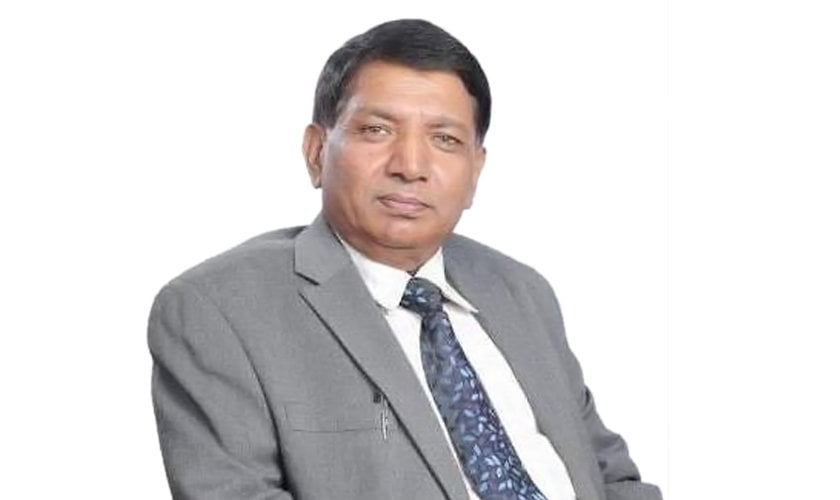
Khanal, who is also the Chairman of the Public Expenditure Review Commission, mentions that they suggested reducing the number of ministries to 12 to 15 and cutting the number of departments from 60/65 to 35 seven years ago. He believes that many tasks currently performed by the center can be transferred to provincial and local levels according to local needs.
Furthermore, Khanal states that there is a need to streamline the provincial and local structures according to local requirements. If this is achieved, it is possible to reduce public expenditure by up to one-third.
Public Expenditure Review Commission's Recommendation on Ministry Adjustment is as follows:
- Merging with the Ministry of Energy, Water Resources, and Irrigation to form the Ministry of Energy, Water Resources, Irrigation, and Drinking Water
- Merging with the Ministry of Physical Infrastructure and Transport to form the Ministry of Physical Infrastructure, Urban Development, and Transport Management
- Merging with the Ministry of Labor, Employment, and Social Security to form the Ministry of Labor, Employment, Youth, and Sports
- Merging the Ministry of Agriculture and Livestock Development and the Ministry of Land Management, Cooperatives, and Poverty Alleviation to form the Ministry of Agriculture, Land Management, and Cooperatives
- Merging the Ministry of Law, Justice, and Parliamentary Affairs and the Ministry of Federal Affairs and General Administration to form the Ministry of Law, Justice, Federal Affairs, and Parliamentary System
- Merging the Ministry of Education, Science and Technology and the Ministry of Communications and Information Technology to form the Ministry of Education, Communication, Science and Technology.
This specific news has been automatically translated by AI. As a result, there may be some inaccuracies or language errors.