Speculation Mounts Over Balen Shah's Cabinet Formation Amidst Election Success


Kathmandu. The Rastriya Swatantra Party (RSP) secured a near-two-thirds majority in the House of Representatives election held on Falgun 21. The RSP won 182 seats in the total 275-member House of Representatives, comprising 125 seats in the first-past-the-post category and 57 in the proportional representation category. This is just 2 seats short of a two-thirds majority.
There is widespread curiosity about how the nation's leadership will proceed. This new force, which emerged by sidelining the traditionally established political powers, had put Balendra Shah (Balen) forward as a candidate for Prime Minister even before the election.
The entire nation is now asking: What will Balen's cabinet look like, and how will it function? The 'Balen wave,' which started from the streets of Kathmandu, has so profoundly resonated across the hills and plains of the country that it resulted in the RSP's unexpected success. The composition of the upcoming cabinet, which must do justice to the massive mandate given by the public based on Balen's popularity and faith in his working style, is being viewed with great seriousness both within and outside the RSP.
Although various names are being discussed and speculated about on social media, Balen and his secretariat are quietly engaged in concrete groundwork.
Balen Seeks Mentors with 'Spirit and Speed'
According to those who know Balen Shah's working style closely, he desires a team whose 'spirit' perfectly aligns with his own. According to Balen's secretariat and newly elected MPs close to him, the primary qualification Balen seeks in a Prime Minister is 'speed'. "He does not want to turn the cabinet into an arena for political bargaining. He is preparing to appoint people who will ensure the entire cabinet moves in the same rhythm and at the same pace," says a person close to him.
MPs close to him state that Balen appears very conscious of keeping this new government free from the disease of 'this is my person and that is your person' party-based allocation seen in the past. "The aim is to ensure that there are no disputes during team selection and that ministers can work result-oriented with full independence in their respective domains; the cabinet will be formed accordingly," he says.
Ministers to be Selected from Expert MPs
However, Balen's secretariat has stated that there has been no formal discussion yet about bringing in external experts as ministers. The secretariat of Balen indicated that the possibility of prioritizing the elected MPs from the RSP is strong, as they themselves are experts in various fields.
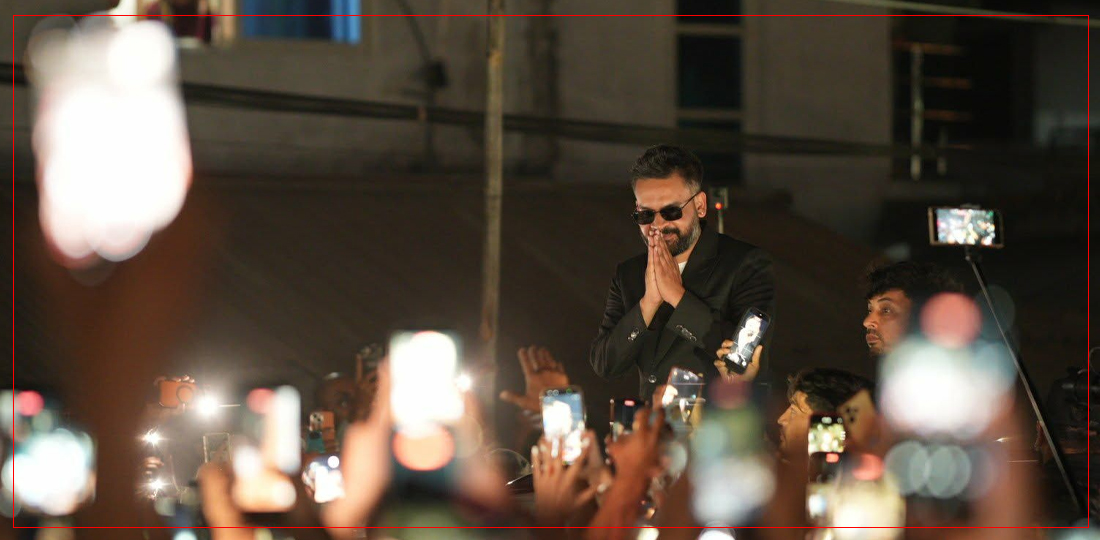
"Our MPs include a majority of individuals proficient in medicine, engineering, economics, law, and management. There will be in-depth discussions on how to assign the right ministerial responsibilities to the human resources within the party. We are unaware of external discussions," says an MP close to Balen. Balen is preparing to entrust departmental responsibilities to those ministers who can deliver visible results to the public.
Shortlist to be Prepared and Finalized
It is understood that a special method will be adopted to streamline the cabinet formation process. Those close to Balen will prepare a 'short list' of potential ministers. This list will be finalized in coordination with RSP Chairman Rabi Lamichhane, Vice-Chairpersons Dr. Swarnim Wagle, DP Aryal, and other top leaders.
"The Election Commission has yet to submit the final list for the proportional representation and the report to the President, so the names have not yet arrived. But the plan is to announce them when the government is formed," says an RSP MP.
According to a member of Balen's secretariat, most newly elected MPs are currently busy thanking voters in their respective constituencies, so the decision-making process is expected to gain momentum only after everyone arrives in Kathmandu. "The leadership is preparing to announce the team based on a transparent criterion, rather than indiscriminate appointments as rumored outside," said that member.
'Time Card' for Cabinet Members
The most interesting and modern aspect of this cabinet is the introduction of the concept of a 'Time Card'. Balen Shah is reportedly looking to bring a model of time-bound performance management to the federal government, similar to what he implemented at the Kathmandu Metropolitan City. According to sources, upon taking the oath, ministers will be handed a specific schedule and workload. Every minister will have to present a clear roadmap of what they will accomplish within the first 100 days of taking charge of their ministry. Balen intends to establish a strict rule where ministers will be held accountable if expected progress is not achieved within the stipulated time.
Inclusive Cabinet Including Gen Z
This cabinet also shows signs of being serious about inclusivity and youth representation. At least one minister from the 'Gen Z' generation will be in Balen's cabinet. "Respectful and meaningful representation of women, indigenous nationalities, Dalits, and Madhesi communities will be ensured to reflect Nepal's diversity," says an MP close to Balen.
Newly elected MPs stated that they are preparing to address challenges first, as the government is being formed on the basis of high public expectation and trust. "The first decision the government will make could be controlling corruption and simplifying service delivery. The primary agenda of this government will be to create an environment where the public does not have to stand in line at government offices or lobby power centers for small tasks," says an RSP MP.
It appears Balen is aiming for a small and lean cabinet. It is understood that legal consultation is underway with experts regarding reducing or merging the number of ministries.
This specific news has been automatically translated by AI. As a result, there may be some inaccuracies or language errors.
_rUe99W5q2c.jpg)