Legal Expert Analyzes Process for Government Formation Following Election Results, Focusing on Rastriya Swatantra Party's Role


Kathmandu. With the final results of the House of Representatives election announced, the political positioning of parties in parliament has become clear. Attention is now focused on the process of government formation.
Some believe that falling short of a two-thirds majority will hinder the Rastriya Swatantra Party (RSP) in making certain decisions. Others, however, feel that not achieving a two-thirds majority prevents the RSP from heading down a path of authoritarianism, which they believe will ultimately benefit the RSP itself.
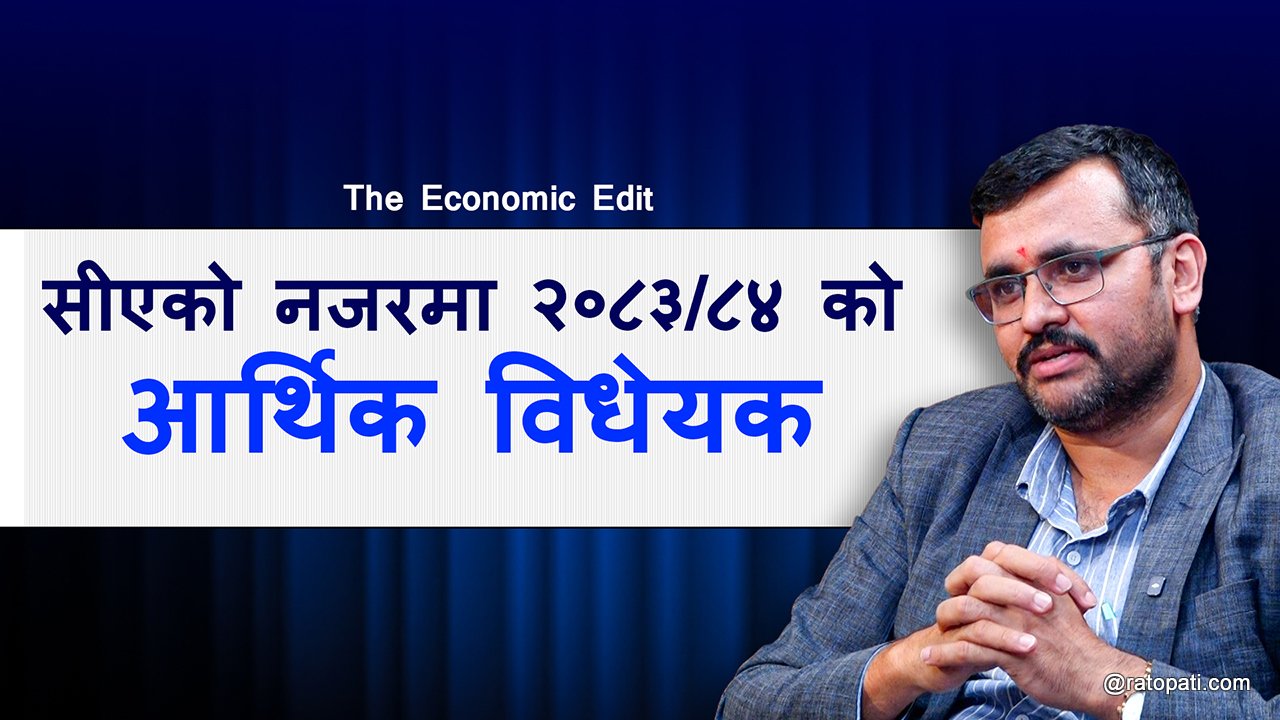
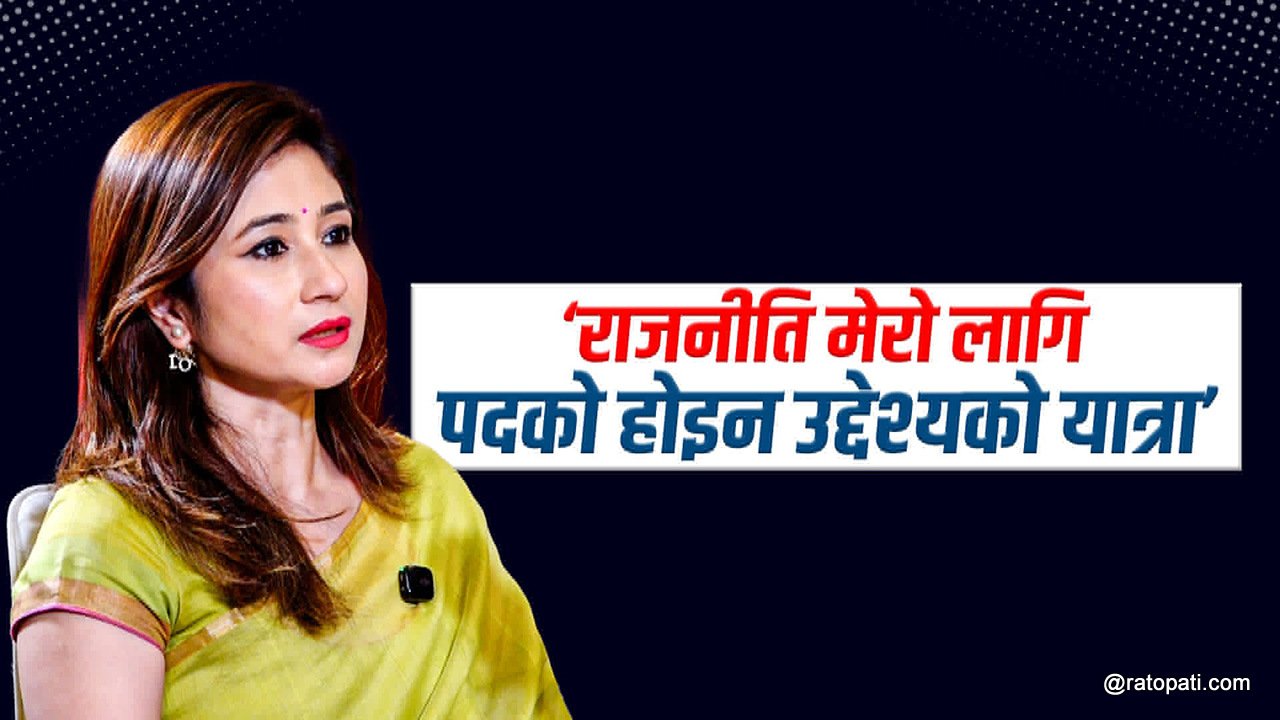
Certain provisions in the RSP's statute appear set to create complications in government formation. A provision stating that only members of parliament cannot elect the parliamentary party leader could cause problems if consensus is not reached. The Supreme Court has already set a date for the final hearing on the money laundering and organized crime cases against RSP Chairman Rabi Lamichhane. Amidst all these complexities, Ratopati spoke with advocate Kapil Dhakal regarding how the government formation process will proceed and other related issues.
Edited excerpts from the conversation with Dhakal—(The detailed interview can be watched in the video)
- The election results are out, and only the Election Commission's report submission to the President remains. How will the process of appointing the Prime Minister move forward now?
After the Election Commission submits the final election results to the President, the party, specifically the Rastriya Swatantra Party today, must elect its parliamentary party leader. The President must be informed that this is the parliamentary party leader of the RSP. After informing the President, the President will appoint the RSP's parliamentary party leader as the Prime Minister under Article 76(1) of the Constitution, in the capacity of the leader of the party commanding a majority in the House of Representatives.
- Does the President have to issue a call for the Prime Minister within a certain number of days?
There is no need for an immediate call. What needs to happen is that the Rastriya Swatantra Party will wait for the Election Commission to submit the results to the President. Following that, the RSP will inform the President that they have selected their parliamentary party leader.
- Does the parliament not need to convene for this purpose?
The parliament does not need to convene for this.
- Do the elected members of parliament not need to take an oath before the Prime Minister is appointed?
Our previous practice and Article 76(1) of the Constitution do not mandate that they must have already taken the oath as members of parliament. It is mandatory for the parliamentary party leader to be selected. It is mandatory for the party to inform [the President] that their parliamentary party leader has been selected. Once this is done, the President can make the appointment.
- It is almost certain that an elected member from the Rastriya Swatantra Party will become the Prime Minister. How much difficulty is there in electing the parliamentary party leader according to the RSP's statute?
It can be very easy. If political maneuvering begins again, it can be very complicated. It is easy in the sense that once the RSP calls a meeting of its parliamentary party, it will ask who wishes to become the parliamentary party leader. If, following this request, only the person who has been put forward as the candidate for Prime Minister according to the RSP's public commitment is nominated, the selection will be unanimous. If two or three people are nominated, it could become complicated. The statute does not prohibit this.
Looking at the Rastriya Swatantra Party's statute, the parliamentary party leader is not chosen only by the elected members of parliament. It states that party members must vote. That is complicated.
If more than one candidate stakes a claim to be the parliamentary party leader, or if the path to consensus is closed, a complex process will begin. Let's put it simply for the general public to understand: the RSP statute allows not only the MPs elected from the House of Representatives, both directly and proportionally, but also the ordinary party members to vote for the parliamentary party leader. Now, the method of voting becomes a question. Will it be done through physical presence? Or online? If it enters the second stage, it becomes a phase of political maneuvering. The first stage has already determined the RSP's Prime Ministerial candidate. Having two candidates nominated, in terms of political culture and ethics, is not very mature. But if it happens, they must follow the procedure. If voting is done physically, the logistics of managing the travel and expenses for 200,000 people must be considered. If voting is done online, the reliability of the online system will be questioned.
The easiest path is for the RSP parliamentary party meeting to convene, only one person to be nominated, the parliamentary party leader to be selected unanimously, a letter informing the President to be sent from there, and the President to immediately appoint the Prime Minister.
- Did the RSP perhaps draft its statute poorly in the name of making it very democratic or more participatory, empowering party members?
This should be viewed this way. The statute does not detail all aspects, including the voting arrangements. It only states that 'it will be like this.' The statute does not specify how the procedures will be formulated. The Rastriya Swatantra Party is different from the mainstream parties; it is a party that claims to prioritize the general public. I think the reason the RSP wants to try this practice is that when the parliamentary party leader is selected in the Nepali Congress, the President must give the ticket for the elected MP. The elected MP will then elect the same person as the parliamentary party leader. It is the same in the UML and other parties. This is not the situation in the RSP.
Does a Prime Minister appointed under Article 76(1) of the Constitution need to seek a vote of confidence?
The provision in Article 76(1) of the Constitution states that if a party commands a majority in the House of Representatives and that person is appointed Prime Minister, they do not need to seek a vote of confidence. The RSP might try to form a government larger than two-thirds by including others. If another party withdraws from the government later, then a vote of confidence will be required. But in today's situation, the Prime Minister appointed from the RSP will not need to seek a vote of confidence.
- It was often heard and said that no single party would secure a majority according to this constitution or our electoral system. Now, even if they get close to a two-thirds majority, being just two seats short of two-thirds, why did such a large mandate emerge? What is the difference if they don't get two-thirds?
This is a significant outcome compared to hopes and expectations. The serious impact of not getting a two-thirds majority is visible. The RSP cannot control the President and Vice President. They cannot amend the Constitution. They have no presence in the National Assembly. Even if they had a two-thirds majority, they couldn't do that anyway, as two-thirds is required in the National Assembly for constitutional amendments.
However, due to the lack of one or two votes, they might need to seek support from others for tasks that a two-thirds majority in the House of Representatives could accomplish. So, there is a deficit from not reaching two-thirds. On the other hand, if they had achieved a two-thirds majority, the RSP's downward trend might have accelerated. Not reaching two-thirds can curb the arrogance of power, so in that sense, it is also beneficial.
The RSP reached this position largely because of Balen Shah. The general understanding is that 70-80 percent of the votes increased due to Balen Shah. However, many of the elected MPs are loyal to Rabi Lamichhane. Doesn't this create a possibility of conflict?
Rabi Lamichhane is the one who needs to exercise the most wisdom for the way forward now. It is natural for the Deputy Chairman or others to become ambitious. No one knows if this sequence of events will repeat in their lifetime or what form the party will take. It is natural for every individual to have ambition. If the goal is to become the Prime Minister, every individual will engage in deceit and trickery, as seen throughout history until today.
Now, the character who needs to exercise the most wisdom in this matter is Rabi Lamichhane. Yesterday's internal conflicts within parties were the background for the Janatagenerated movement and everything else. If Rabi Lamichhane exercises wisdom now, there will be no problem in the RSP. However, the moment Balen Shah is told, 'You are not the Prime Minister,' the RSP will fall into a serious crisis from that very point.
This specific news has been automatically translated by AI. As a result, there may be some inaccuracies or language errors.