Escalating Middle East Tensions Threaten Evacuation of Over 1.7 Million Nepali Workers


Kathmandu. The Gulf region has become a center of conflict due to the escalating aerial attacks and counter-attacks between Israel-US and Iran.
Following attacks by Israel and the US on Iran for several weeks, Iran has continued its retaliatory strikes. The tension in the Gulf countries has disrupted air travel, leaving millions of passengers unable to reach their destinations or return home.
This tension, which arose after the US and Israel began attacking Iran on February 28, shows signs of prolonging. Iran has attacked US base camps in countries like the United Arab Emirates (UAE), Qatar, Saudi Arabia, and Kuwait, while the US and Israel continue their attacks on Iran.
The Gulf nations are directly affected by this war. Consequently, millions of Nepali workers residing in various Gulf countries are also facing problems.
There are over 1,729,000 Nepali citizens in the Gulf countries. According to the latest data from the Ministry of Foreign Affairs, 1,729,288 Nepalis are employed across the UAE, Saudi Arabia, Qatar, Kuwait, Iraq, Bahrain, Oman, Cyprus, Israel, Lebanon, Egypt, and Iran.
If the number of those who went without work permits, those who entered on visit visas and stayed hidden, and those without proper documentation are added, this figure is estimated to reach around 2 million.
If the war intensifies further, a serious question arises: can the Government of Nepal rescue more than 1.7 million of its citizens safely?
According to experts, the government is not financially capable of rescuing all citizens immediately. They state that repatriating 1.7 million Nepalis in a short time appears almost impossible given Nepal's current technical, financial, and diplomatic capacity.
Foreign Minister Balananda Sharma stated that a national-level plan is needed for the rescue of millions of Nepali citizens in the Middle East. He shared his views during a press conference at the Ministry of Foreign Affairs on Wednesday.
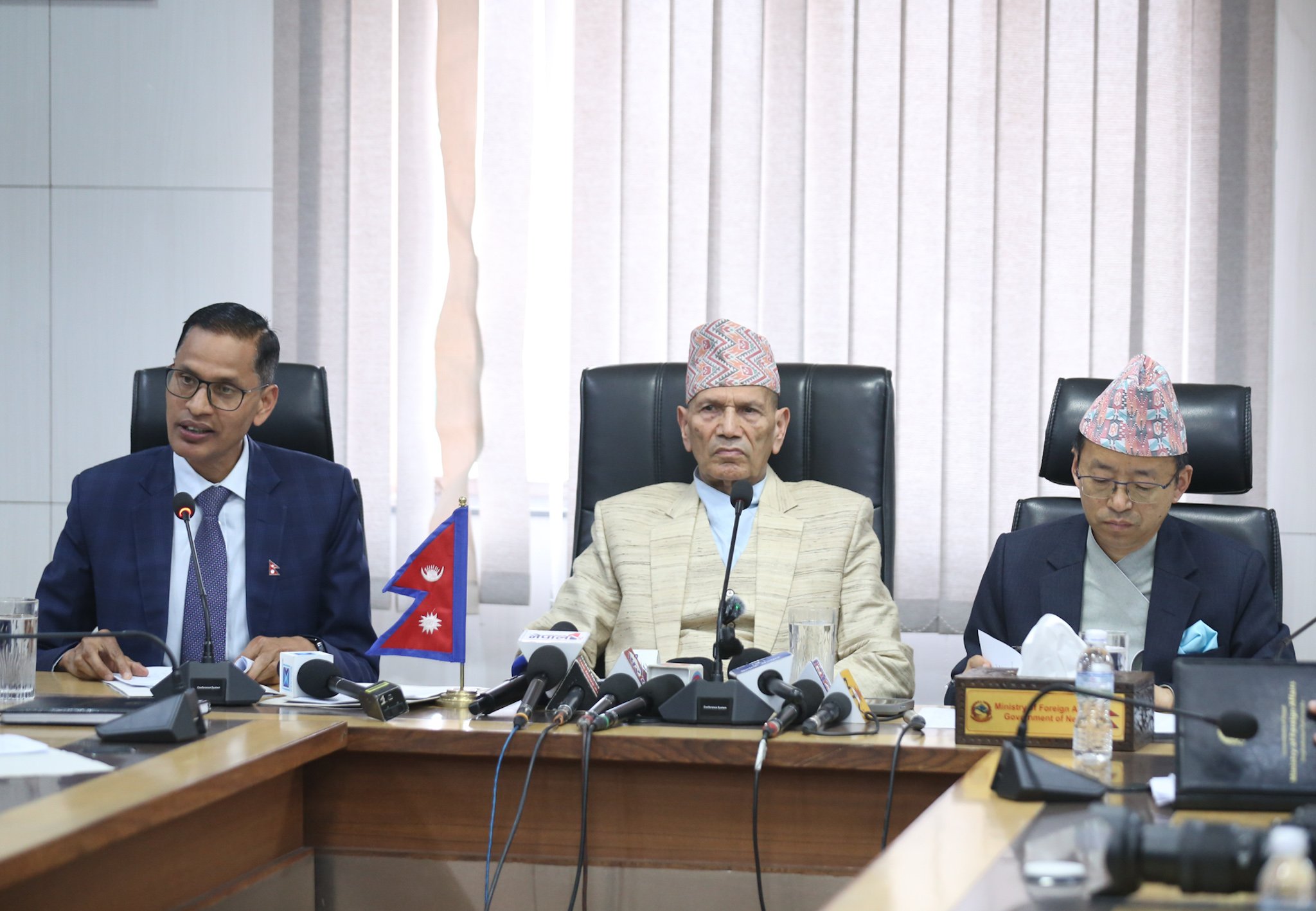
Minister Sharma mentioned that there is a situation where 2.5 to 3 million citizens, who went formally or informally, might need to return to Nepal. He informed that the Ministry of Foreign Affairs has already started work on infrastructure development.
Minister Sharma said, "We have established a Situation Center." He added that the Situation Center is regularly updating and has established contact everywhere.
Minister Sharma further stated, "It regularly updates this data and will serve as the base if a rescue is needed tomorrow. It has established contact everywhere. The ministry has already issued directives on how many citizens there are, where they are, and how to coordinate."
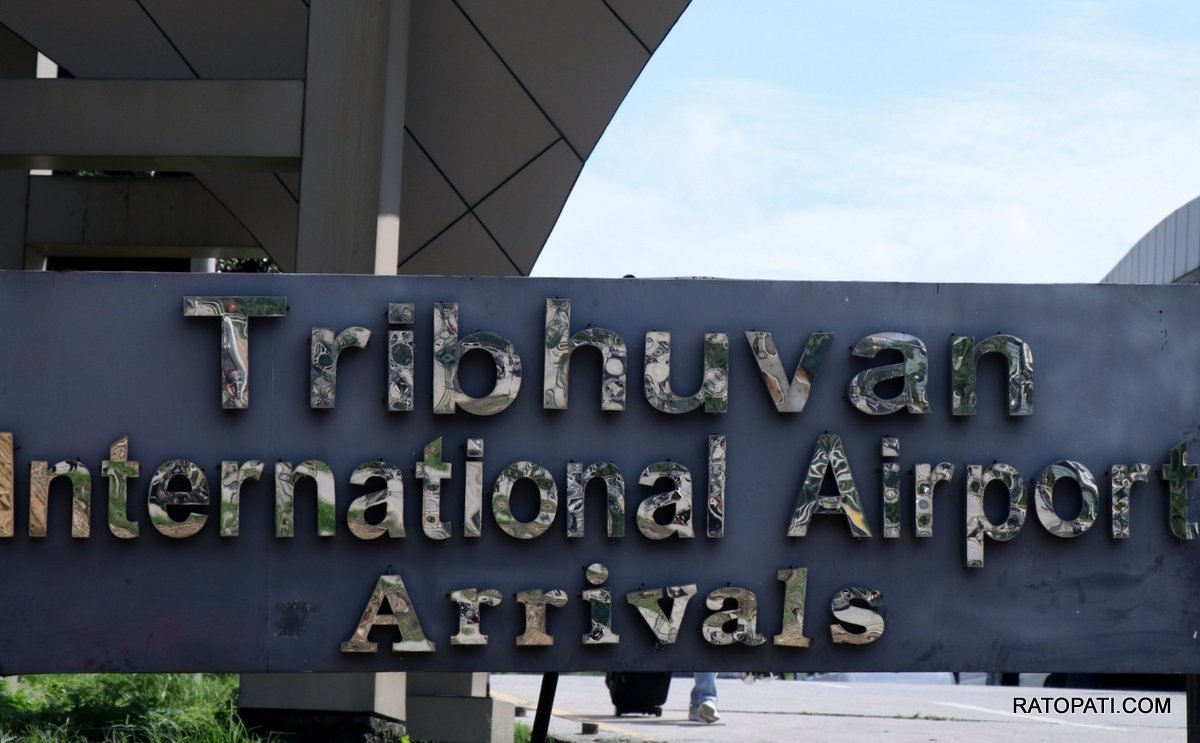
According to the Tribhuvan International Airport office, in the last week, the number of passengers returning from various Middle Eastern countries to Nepal has been higher than those departing from Nepal.
The airport stated that since Falgun 20, 3,649 passengers have arrived from Middle Eastern countries, while 2,028 have departed from Nepal. The airport office data shows a total of 23 flights during this period. On the other hand, about a dozen flights are being canceled daily since the conflict escalated in those countries.
Why is Rescue Not Easy?
In any crisis, air travel is the primary means of citizen rescue. However, there is a vast difference between Nepal's air capacity and the number of Nepalis in the Gulf.
Currently, three domestic airlines (Nepal Airlines, Himalaya Airlines, and Buddha Air) operate international flights from Nepal. Among these, only the national flag carrier Nepal Airlines and the privately-owned Himalaya Airlines have the capacity to fly directly to the Gulf countries.
Both these companies have a total of four aircraft each for international flights. Nepal Airlines has two narrow-body and two wide-body aircraft, while Himalaya only has narrow-body aircraft.

Based on the data from Tribhuvan International Airport, Nepal Airlines can serve about 54,000 passengers per month, and Himalaya Airlines can serve about 35,000. That is, even utilizing the full capacity of these two domestic airlines, they can carry a maximum of 89,000 passengers per month.
If the war escalates, foreign airlines suspend flights, and the government has to use only domestic aircraft to bring back 1,729,000 Nepalis in the Gulf, it will take a long time to repatriate everyone, even with continuous flights.
The Dilemma of Rescuing by Cutting Development Budget
The other most challenging aspect of rescue is the financial situation. Nepalis in the Gulf region are the backbone of Nepal's economy, but their rescue during a crisis will be a major financial test for the state.
According to economist Keshav Acharya, if the conflict escalates, leading to a humanitarian crisis requiring rescue via chartered flights, the government will face an additional financial burden of hundreds of billions of rupees.
Economist Acharya said, "If this conflict flares up, how will the 1.7 million people there be rescued? It will cost billions of rupees for that." He added, "In such a situation, the government will have to stop capital (development) expenditure and pour the budget into saving the lives of its citizens. The government will face unprecedented humanitarian and economic pressure."
Acharya clarified that the state will face a double blow: the national treasury being depleted by the rescue efforts and the loss of a large portion of remittances.
According to bank data, about 41 percent of the total remittances entering Nepal currently come from the Middle Eastern countries. According to economist Acharya, about 5 billion rupees in remittances enter Nepal daily. Of this, about 2.5 billion rupees come only from the Gulf. If workers lose their jobs due to the war and return home, this income will drop to zero. This will severely impact the country's economy and balance of payments situation.
Government Initiatives: Emergency Response Team and Data Collection
Understanding the gravity of the situation, the government has begun taking some important steps for the security of its citizens. According to the Ministry of Foreign Affairs, the government has formed a 'Rapid Action Team' for potential rescue and security while closely monitoring the latest developments in West Asia.
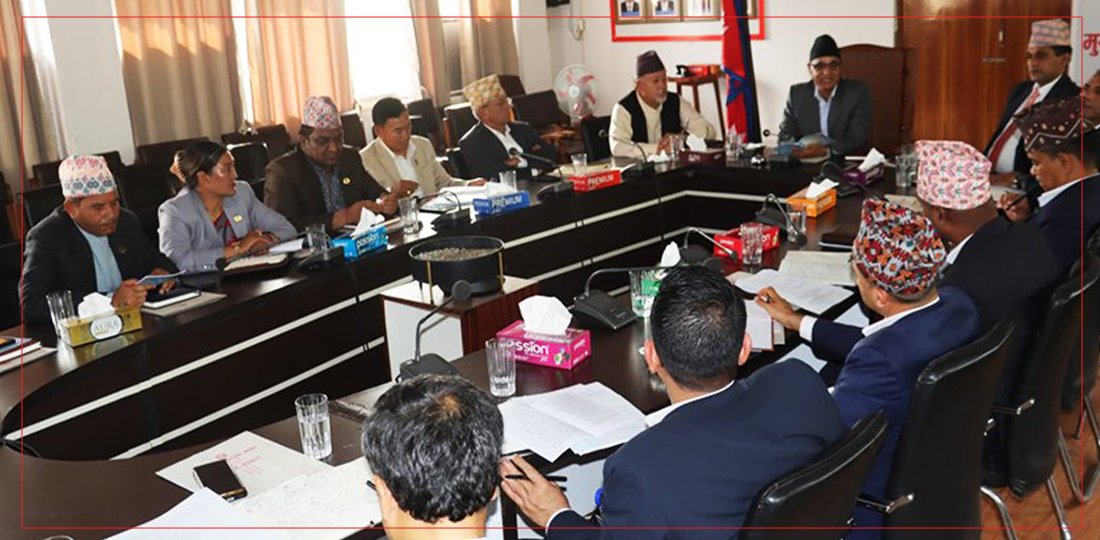
Ministry Spokesperson Lok Bahadur Poudel Chhetri stated that the government is currently collecting data on citizens in various countries. According to him, an Emergency Response Team (ERT) has been formed under the coordination of the Foreign Secretary.
High-ranking representatives from the Ministries of Home Affairs, Finance, Law, Culture, Tourism and Civil Aviation, Education, and Labor, as well as the Department of Foreign Employment, Department of Immigration, Consular Services Department, and the Civil Aviation Authority of Nepal, are participating in this mechanism.
The government has directed the 10 Nepali missions in West Asia (Embassies in Tel Aviv, Doha, Riyadh, Abu Dhabi, Manama, Kuwait City, Muscat, Cairo, Jeddah, and the Consulate General in Dubai) to send regular 'Situation Analysis Reports' on the local conditions. The Ministry of Foreign Affairs stated that the government is formulating its future strategy based on these ground reports.
Similarly, the Consular Services Department has launched an online registration system to understand the updated status of Nepalis. The department has issued a notice for citizens currently in conflict-affected countries to register online.

As per the notice, Nepalis currently abroad are filling out the online registration form. According to the department, more than 54,000 Nepalis in West Asia have registered their details so far. The ministry stated that work is being prioritized based on the registered details.
Although air travel is currently disrupted in some places, embassies have stated that facilitation is being provided for those wishing to return immediately as limited flights have resumed from the UAE, Saudi Arabia, and Oman.
According to experts, the priority now is to collect updated data and ensure regular information flow through embassies and missions. They also suggested that the government should activate the emergency coordination mechanism and mobilize necessary safe shelters and relief funds if needed.
Psychological Trauma for the 1.7 Million Families
The tension in West Asia has pushed not only the workers sweating it out in the Gulf but also their dependent families in Nepal into severe psychological distress.
Currently, while 1.7 million Nepalis in the Gulf are affected, 1.7 million households in Nepal are directly impacted.
According to analyst Rabishankar Sainju, the fear among the families of these workers in Nepal has increased as soon as the conflict escalated there. Sainju said, "It is very sensitive how much psychological pressure and fear the families here experience even from a small incident there."
He stated that on one hand, there is the fear of losing employment, and on the other, the fear of whether their loved ones will return home safely is spreading.
Rescuing 1.7 million Nepalis at once is beyond Nepal's capacity. Therefore, experts suggest that the government should maximize diplomatic channels from now on and seek guarantees from the governments of the respective countries for the safety of Nepali citizens.
In the long term, there is no alternative but to create internal employment opportunities at home and reduce excessive dependence on remittances.
This specific news has been automatically translated by AI. As a result, there may be some inaccuracies or language errors.