Constitution Amendment Debate: Experts Divided on Governance and Implementation
Kathmandu. With the formation of the 'Task Force for Preparing Constitution Amendment Debate Paper' to build national consensus for constitution amendment, the task force has been collecting opinions and suggestions from various political parties, legal experts, and stakeholders.
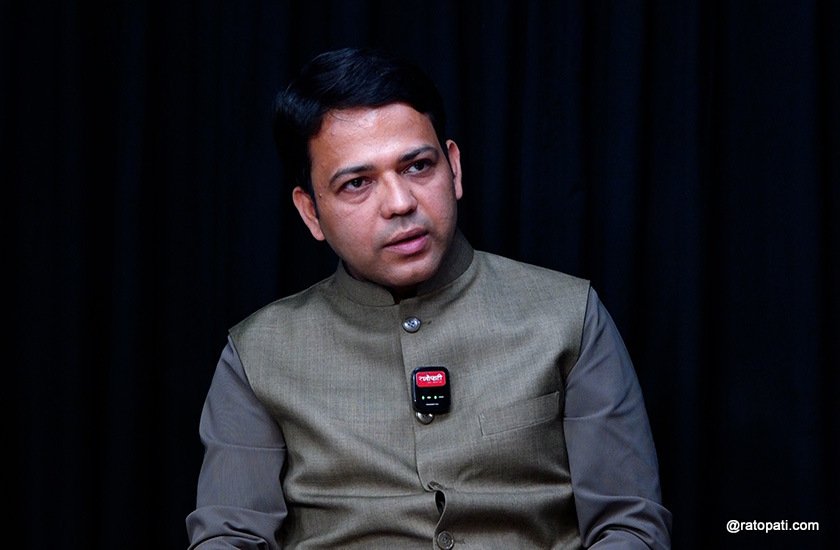
The task force, formed under the leadership of the Prime Minister's Chief Political Advisor Asim Shah, with the participation of parties represented in parliament, has collected opinions and suggestions on issues including electoral system reform, directly elected executive system, provision that parliament members do not become ministers, and non-party local government, and provincial structure reform.
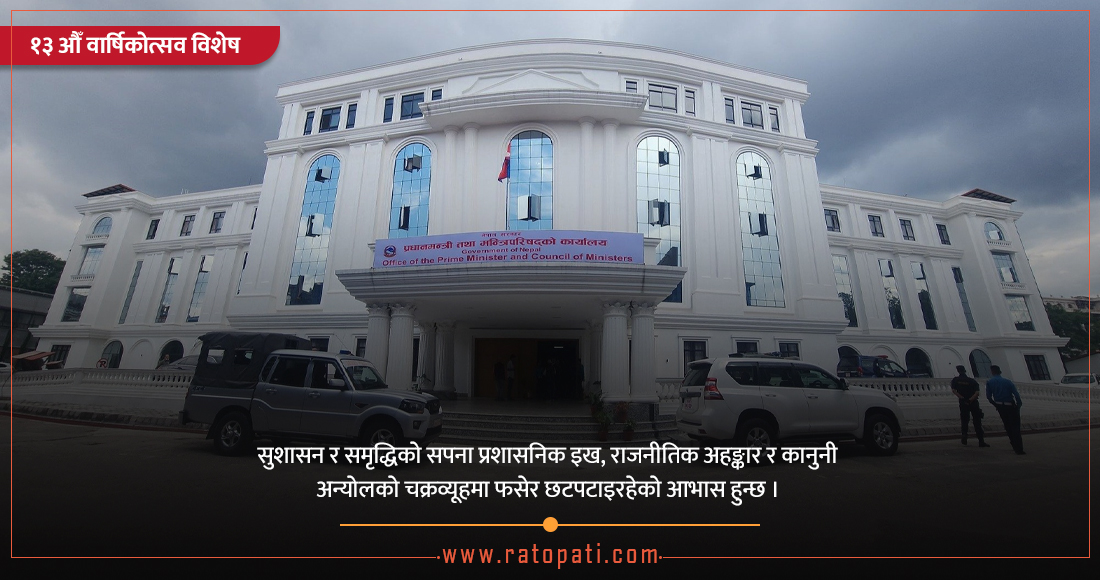
The current government led by Balendra (Balen) Shah has declared its first year in office as the 'Year of Good Governance'. In this regard, the government has also formulated various good governance-focused action plans.
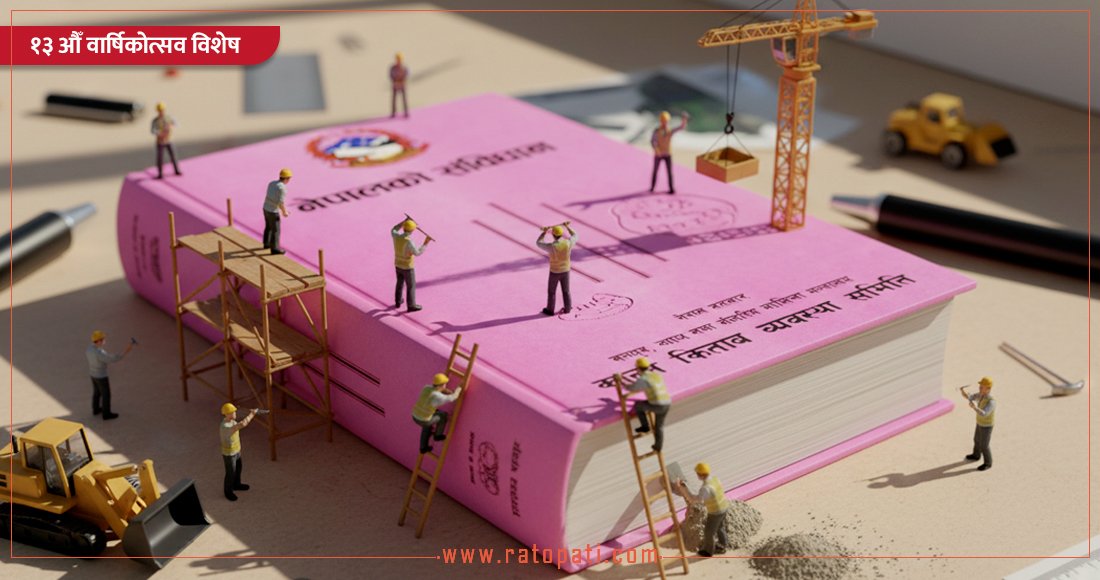
Ten years have passed since the promulgation of the Constitution of Nepal, 2072 BS, a federal republic. The experiences gained in the implementation of the constitution over this decade naturally necessitate an analysis of whether there have been any shortcomings in terms of good governance. On one hand, the government prioritizing good governance by publicizing a 100-point agenda, and on the other hand, forming a task force to prepare a debate paper for constitution amendment, has led some to analyze the interrelationship between constitution amendment and good governance.
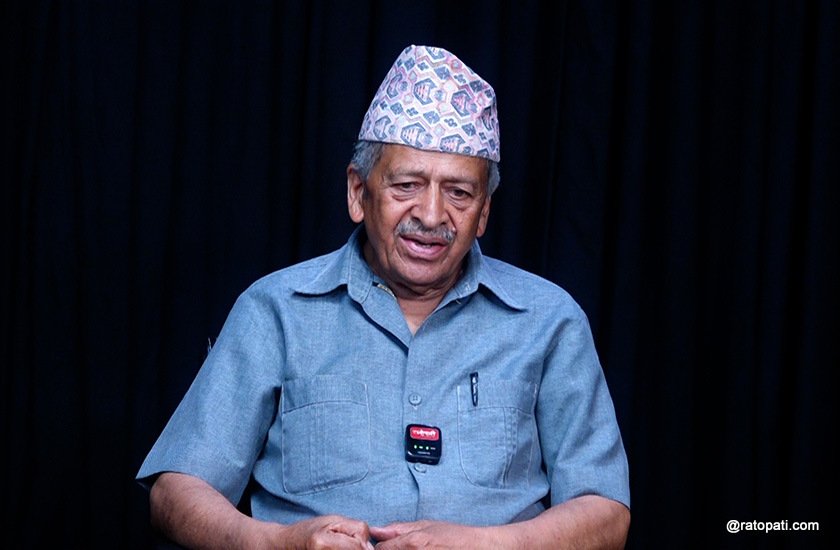
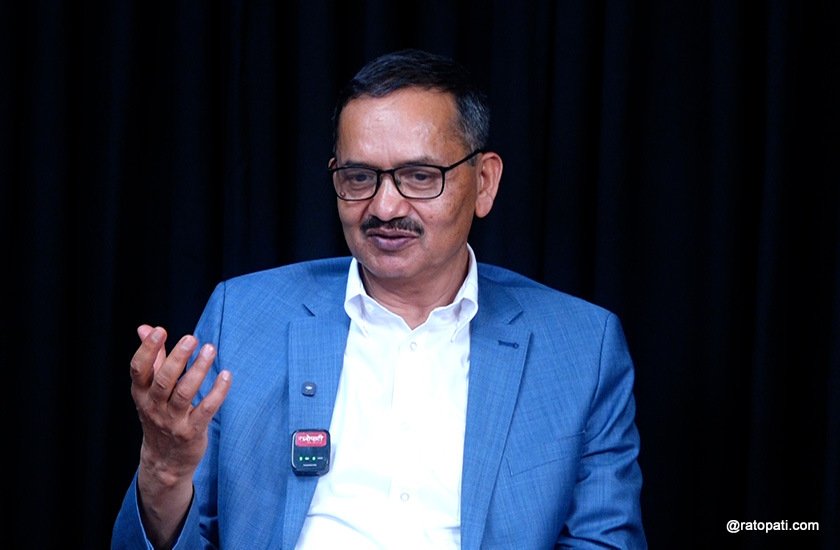
Legal experts hold mixed views on whether the current constitution is appropriate from a good governance perspective. Legal expert and former minister Govinda Bandi (Koirala) claims that the constitution and existing laws have very good provisions regarding good governance. However, constitutional expert Dr. Chandrakant Gyawali argues that constitution amendment is indispensable for good governance.
According to former minister Bandi, good governance has three important pillars: a accountable government, an independent judiciary, and a monitoring mechanism. He states that the constitution ensures all three pillars.
He clarified that the problem lies in the implementation and enforcement of the existing constitution and laws, and the fault cannot be attributed to the constitution or the laws.
_mIOIENuY34.jpg)
"In terms of corruption control, the provision for the Commission for the Investigation of Abuse of Authority is in the constitution itself. The Commission for the Investigation of Abuse of Authority is extremely powerful," he said. "Anti-corruption bodies worldwide do not have as much power as our Commission for the Investigation of Abuse of Authority. The Commission for the Investigation of Abuse of Authority is so powerful that it conducts investigations and also prosecutes. Such a powerful body is rarely found in any constitution."
Former minister Bandi clarified that the constitution has made sufficient institutional arrangements for good governance. "Governance is linked to delivery. We have a Good Governance Act. The Good Governance Act provides for transparency in decision-making," he said. "It includes a process of consultation in decision-making. Policy decisions must follow a process."
According to former minister Bandi, there are problems in the adherence and effective implementation of existing legal and constitutional provisions.
He also claimed that there is good coordination between the constitution and the Good Governance Act. He said, "When we talk about good governance, we talk about development. The constitution also mentions development policy. It is mentioned that development should be based on priorities, not concentrated in one place or based solely on access."
He asserted that the Criminal Code has provisions for imprisonment and punishment for unnecessary delays in development construction and economic irregularities, and that laws have also been made for public procurement processes. "Regarding good governance, the constitution and laws have adequate provisions. Rather, we hear complaints that development work is delayed due to the strict rules in these laws. There is a problem of work not being completed on time according to the provisions of the Public Procurement Act," he said.
According to former minister Bandi, there are problems in the adherence and effective implementation of existing legal and constitutional provisions. "Rather, there might be too many related institutions, which can lead to jurisdictional disputes. The National Human Rights Commission, the Dalit Commission, and the Women's Commission have similar areas of work. The Department of Money Laundering Investigation is on one side, and the Commission for the Investigation of Abuse of Authority is on the other. There is overlap there as well," he said.
Former minister Bandi stated that the question arises whether good governance has been compromised due to the creation of more institutions than necessary and institutions with excessive power. He said, "We can review whether all these institutions envisioned by the constitution are necessary. I don't see a lack of mechanisms or institutions. Rather, in a country with a small geography and a small economy like ours, we may need to reconsider during constitution amendment whether so many institutions are necessary, but it is not that good governance is lacking due to the absence of any mechanism or institution."
Constitutional expert Dr. Gyawali believes it would be appropriate to discuss this in a broader sense rather than a general one.
_uwZqw7sHpf.jpg)
He recalls that the agenda of the Janji movement in the previous August primarily included three agendas: good governance, NepoBaby, and directly elected executive. He argues that these issues are related to good governance in one way or another.
For this, the constitution needs to be amended, said Dr. Gyawali. "The constitution itself is not a static object; there is a belief that it should be amended continuously. As it is amended according to time and the demands of the people, it becomes organic and living," he said.
Dr. Gyawali stated that although the constitution prohibits a majority government from dissolving parliament, this has not been strictly followed in the past decade. "Good governance was also harmed there," he said. "Even though it was said that no no-confidence motion would be brought against the Prime Minister for two years, the Prime Minister had to seek a vote of confidence as soon as the coalition partner withdrew its support. The intention of not bringing a no-confidence motion for two years was for the government to be stable for at least two years. Despite this, parliament and the government became unstable."
He emphasized that the task force preparing the constitution amendment debate paper should review the constitution and analyze whether the constitution is a hindrance or whether the actors implementing it are responsible.
He argues that if the country had operated according to the constitution, laws, and the rule of law, it would not have reached this stage. He said, "That is why the issue of a directly elected executive arose in the Janji movement. The idea of a directly elected executive came about with the need for a parliament with a fixed term and a government with a fixed term."
Dr. Gyawali states that there should be a serious discussion about which model of governance to adopt, as a directly elected executive is a non-parliamentary system of governance, while the current system is parliamentary. He said, "If the Prime Minister is to be directly elected by the people, he must secure at least 50 percent plus one vote. If he cannot secure that, another round of elections must be held. In that, a decision must be made whether to make the President or the Prime Minister the directly elected executive." He said that various models for this can be discussed.
He argues that a similar arrangement should be made for chief ministers in the provinces. He emphasized that the task force preparing the constitution amendment debate paper should review the constitution and analyze whether the constitution is a hindrance or whether the actors implementing it are responsible.
Dr. Gyawali stated that although there are three tiers of government and three tiers of parliament in federalism, the judiciary has not yet been decentralized accordingly. "There are high courts, but they are not judicial bodies under the provinces. There is a judicial committee at the local level, but it is also a quasi-judicial body," he said.
Arguing that there are jurisdictional disputes between the three tiers of government, Dr. Gyawali says that the provinces have not been strengthened as envisioned by the constitution. "We moved to federalism because a centralized state system did not lead to development and good governance, and the people did not get their rights, but the provinces have not yet received their rights," he said.
Dr. Gyawali argues that constitutional bodies have also fallen under the shadow of the executive. "Those bodies should be strengthened so that they are not overshadowed by the government. The Election Commission should have the authority to announce elections for all three tiers and the power to create its own budget. The Commission for the Investigation of Abuse of Authority should be strengthened. It does not have jurisdiction over improper acts. Its jurisdiction is only in corruption. Good governance can only be guaranteed if it is strengthened in such a way that there is no government interference in investigation and prosecution," he said.
He stated that even constitutional positions are being sold. He clarified that good governance can only be achieved if appointments to those positions are made based on merit and competence.
This specific news has been automatically translated by AI. As a result, there may be some inaccuracies or language errors.