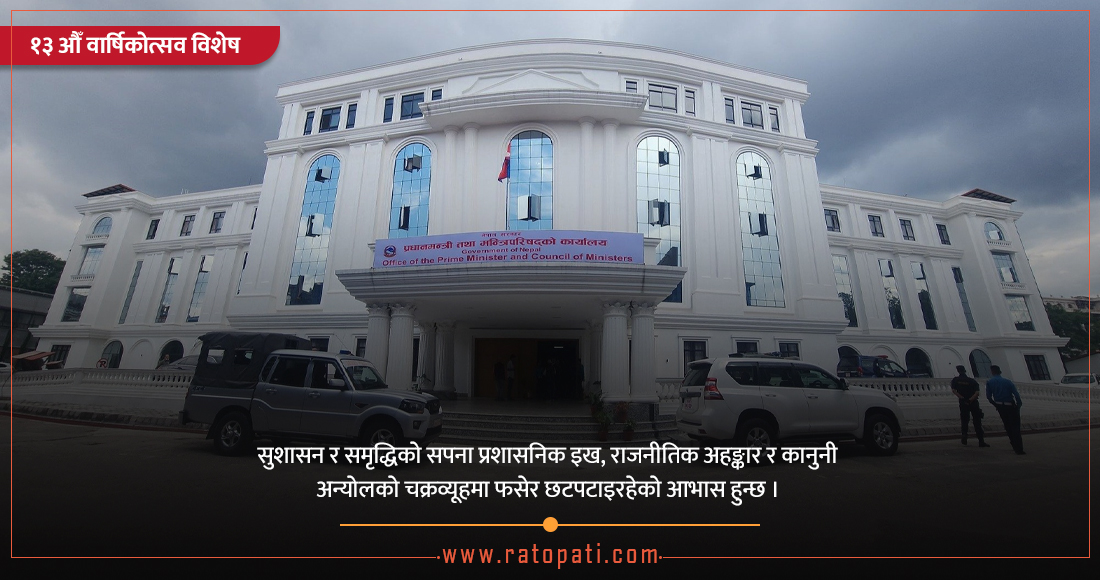
Digital Nepal Framework Faces Challenges Despite Increased Internet Access and Digital Payments

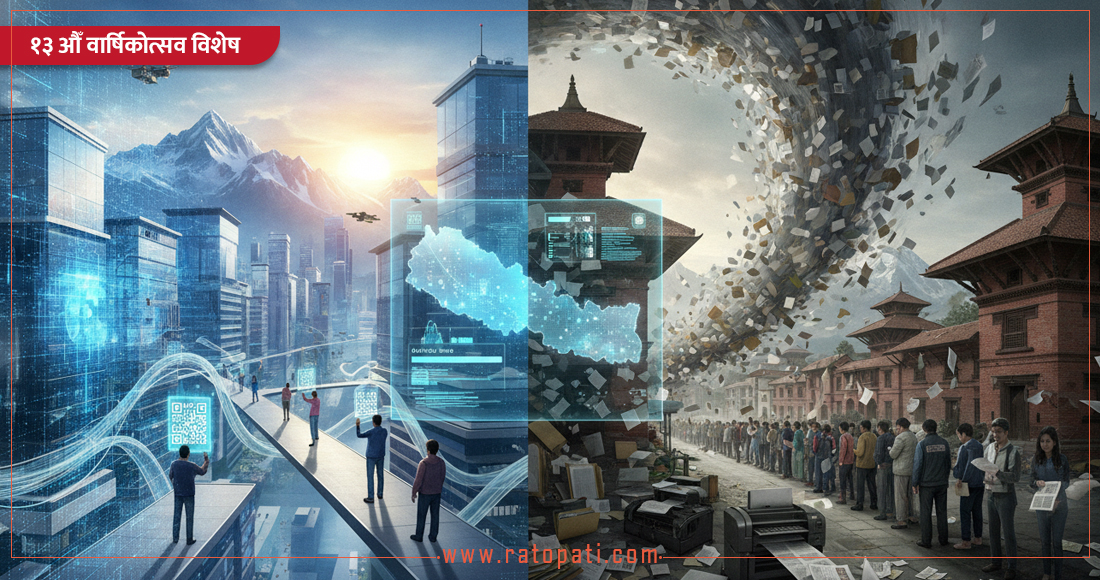
Kathmandu. Despite a significant increase in internet access and digital literacy in Nepal, the use of digital technology for good governance and prosperity has been slow. While the reach of the internet, mobile phones, and digital technology has strengthened the digital payment system in the banking sector, the expected results in government administration and good governance, where citizens directly receive services, have not materialized. Sectors of direct public concern such as local government, health, transportation, and land reform are still struggling with traditional paper processes and complexities, forcing citizens to endure hardship.
The distribution of national identity cards, driving licenses, and services at the local level remain cumbersome and confined to traditional systems. Of those who have submitted their details, 80 percent of citizens have not yet received their national identity cards. One also has to wait for years to get a driving license. These are just two examples. There are many such instances that highlight the challenges in implementing the 'Digital Nepal' concept, which was put forward for good governance and prosperity.
Why is the concept of Digital Nepal, essential for good governance and prosperity, not being realized? Stakeholders believe that 'lack of coordination between government agencies, policy complexities, and poor quality of infrastructure are the main contributing factors.'
- Over 40 Million Internet Access
The government has laid 19,239 kilometers of optical fiber. The density of internet customers reached 145.7 percent by February 2082 BS. Digital television reaches 82 percent of households. Mobile broadband density has reached 100.3 percent of the population.
As of February 2082 BS, 30,067,776 telephones were in use. In the last fiscal year 2081/82, this number was 29,727,916. With the expansion of mobile services, the number of basic telephones has been declining.
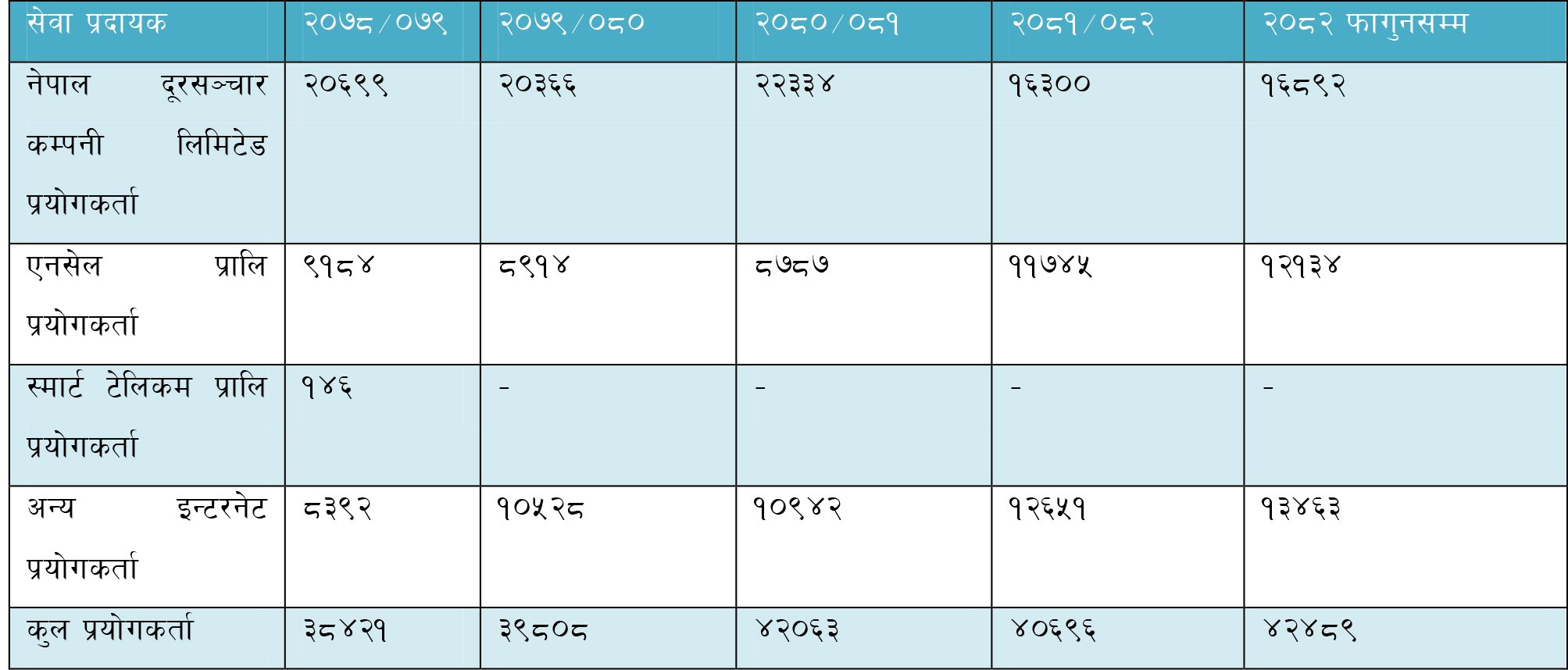
According to the Economic Survey 2083/84, 42,489,000 users were using data internet services provided by service providers licensed by the Nepal Telecommunications Authority as of February 2082 BS.
How many used in which year?
Source: Government of Nepal, Ministry of Finance
In the fiscal year 2078/079, internet users were 38,421,000; in 2079/080, they were 39,808,000. In 2080/081, there were 42,063,000 users. Similarly, in 2081/082, there were 40,696,000 users, and by the end of February 2082 BS, there were 42,489,000 internet users.
- Leap in Financial Access and Banking Transactions
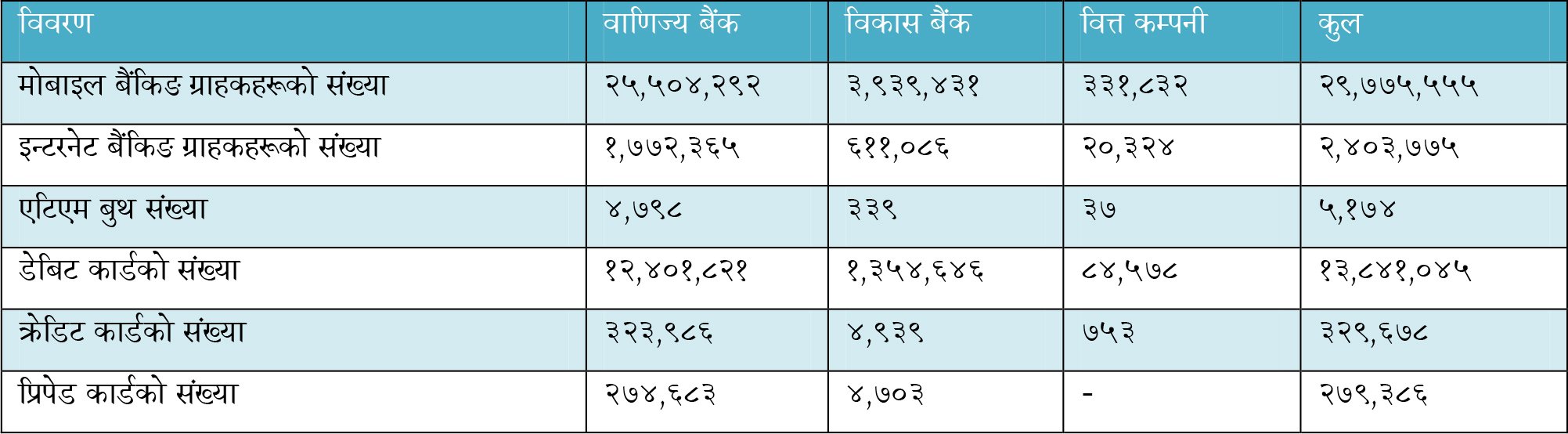
There has been historic progress in the use of digital technology in Nepal's banking sector. According to data from the Nepal Rastra Bank until March 2082 BS (March-April 2026), the number of mobile banking users across the country has reached nearly 30 million.
A total of 29,775,555 people have availed mobile banking services from commercial banks, development banks, and finance companies. Among these, commercial banks have the largest share, with over 25.5 million customers using this service. Development banks have 3.939 million and finance companies have 331,000 mobile banking customers.

Similarly, the use of debit cards (ATM) for cash withdrawal and payments is also increasing. A total of 13,841,045 debit cards have been distributed across the country. In comparison, the use of credit cards is lower. Only 329,678 people nationwide are using credit cards, with a large portion (323,000) being customers of commercial banks.
2,403,775 people are using internet banking services. Likewise, the number of prepaid card users has reached 279,386.
For cash withdrawal facilities, banks and financial institutions have also expanded their ATM network across the country. Currently, a total of 5,174 ATM booths are in operation nationwide. Of these, commercial banks operate 4,798, development banks 339, and finance companies 37 ATM booths.
- Digital Payment System
Source: Nepal Rastra Bank
With the Nepal Rastra Bank and the government prioritizing the Digital Nepal concept, electronic payment access has reached from small shops to large commercial malls. Experts analyze that this revolution in the payment system has brought transparency to the economy and made transactions faster and more efficient.
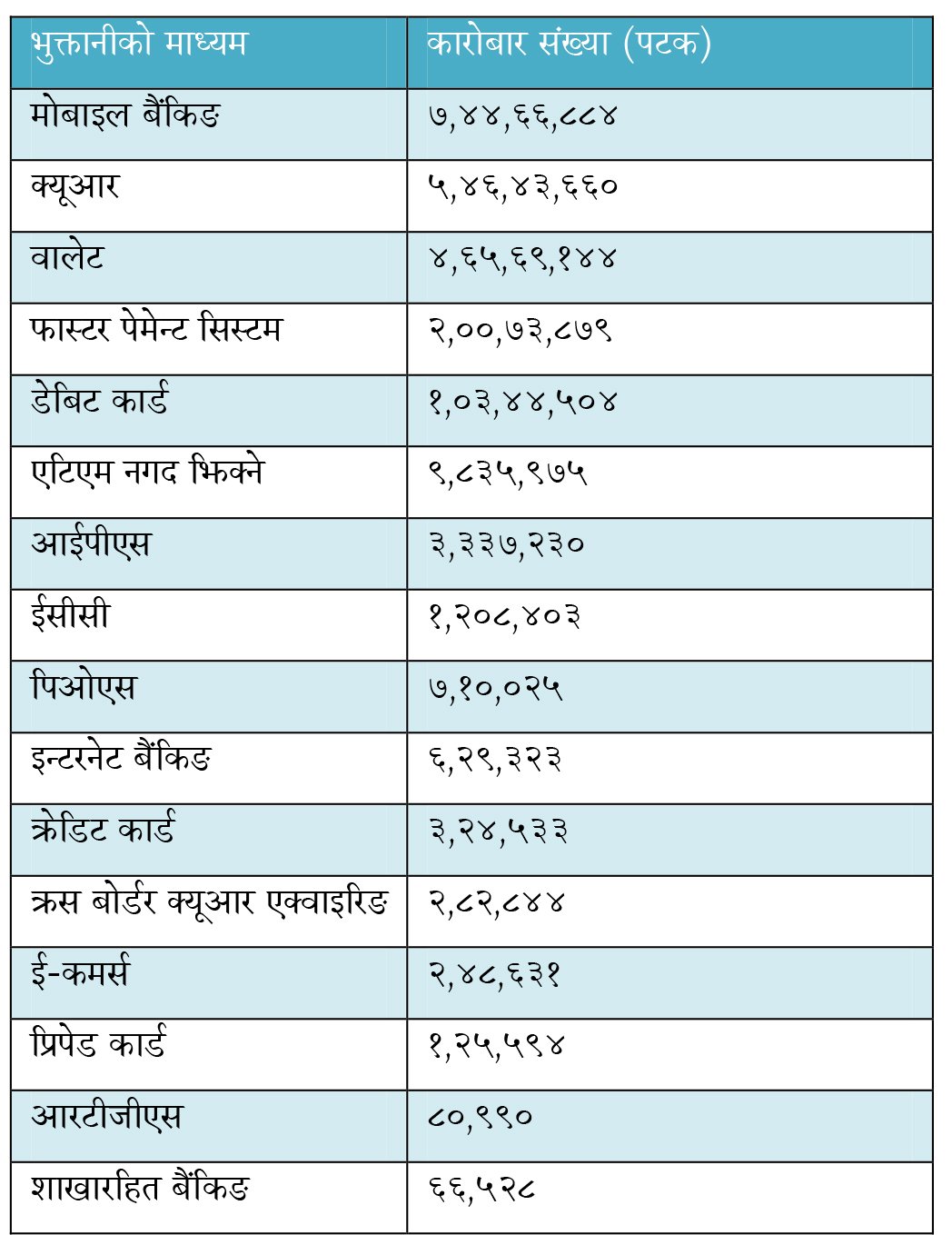
Mobile banking is the most used in Nepal. In March, 74,466,884 transactions were made through mobile banking. This indicates a growing attraction of Nepali consumers towards digital banking over traditional banking.
After mobile banking, QR codes are the most used for small payments. In March, over 54.643 million payments were made via QR. Similarly, transactions through various digital wallets were made 46.569 million times.
This clearly shows that people are increasingly freed from the hassle of carrying cash. While the number of cash withdrawals from ATMs has decreased to 9.835 million, the use of debit cards has exceeded 10.3 million times.
- State of Digital Transactions
Source: Nepal Rastra Bank
- Areas Not Reached by Digital Technology
While technology is making leaps in the internet and digital financial sectors, the situation in many other areas directly concerning citizens remains dire. Examples include local government, health, public transportation, and education, which are far from the mainstream of digital technology.
Ward offices of rural municipalities and municipalities, where citizens daily need to obtain services like kinship certificates and birth registrations, are still fully dependent on traditional paper processes. Although online entry is mentioned, services at the local level remain cumbersome due to slow internet speed and a lack of skilled staff.
Even though online systems have been implemented in bodies like the Land Revenue, Transportation, and Passport departments, the physical presence of citizens and long queues have not yet been eliminated.
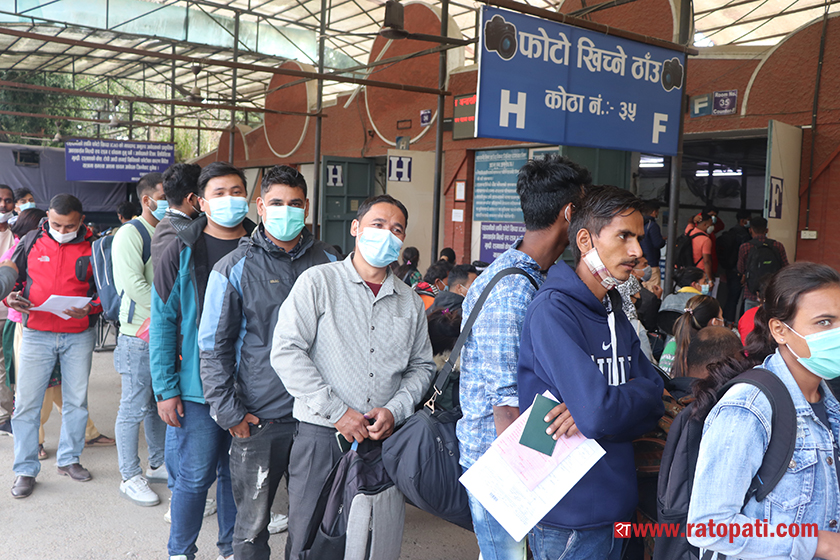
Even in many hospitals, the sight of long queues for traditional tickets instead of online tickets mocks the Digital Nepal campaign.
According to the Economic Survey data, personal and biometric details of 20.1 million citizens have been collected nationwide. However, only 4.033 million, or 20 percent of those who submitted their details, have received their national identity cards. The fact that 80 percent of citizens are still deprived of their digital identity cards clearly shows how weak the foundation of Digital Nepal is.
A similar serious sluggishness is observed in the printing and distribution of driving licenses, where approximately 2.9 million drivers who passed the exam years ago have been waiting for the card for a long time. Frustrated by having to carry paper slips for a long time without receiving their licenses, service recipients had become angry.
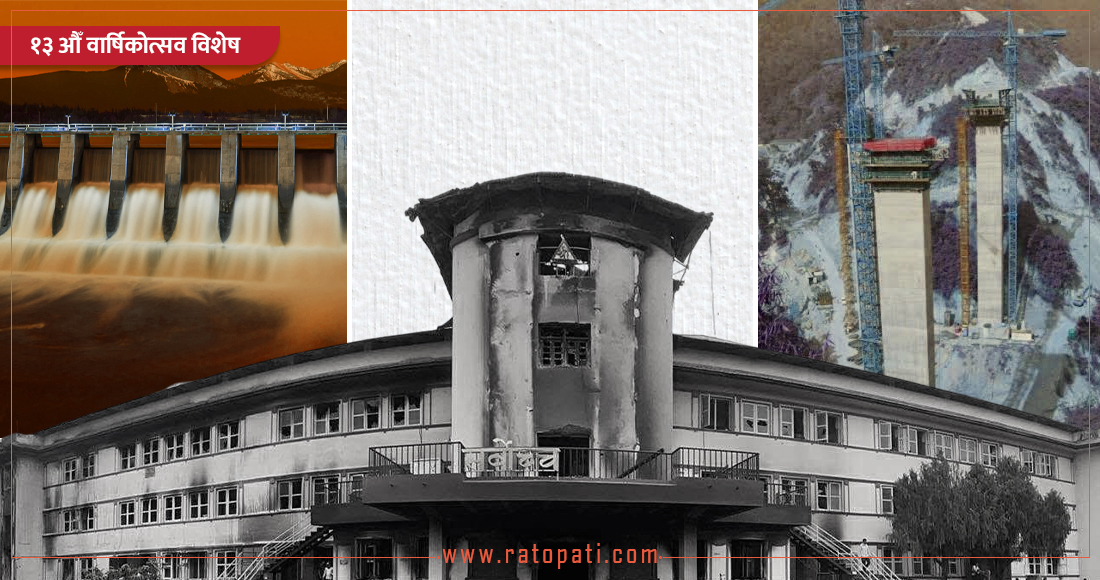
Following the fire at the department's printing machine during the Gen Z movement last August, the printing of licenses began from the Security Printing Center on November 7, 2082 BS. Since then, 1.5 million driving licenses have been printed, according to the Department of Transport Management. According to Keshav Khatiwada, Director of the Department, the target is to print all remaining licenses by the end of Asar.
He also informed that discussions are underway to print licenses with less than one year of validity only after renewal.
Although the government has launched the 'Nagrik App' with the objective of delivering government services to citizens at their fingertips, the services integrated into it are not fully automated.
The number of active users of the 'Nagrik App', launched with the aim of providing government services digitally, has reached 3.5 million. According to the Department of Information Technology, there is a regular increase in the number of people wishing to join the app and enter their details.
_6YtoZvZPnA.jpg)
According to Prakash Dawadi, Information Officer of the Department, details of about 7.5 million citizens have been included in the system so far. Among them, 3.7 million users have completed the registration process, and 3.5 million users are currently regularly active. The department stated that a certain number are pending due to pending identity verification or mismatched details among those registered.
Despite citizens filling out forms online or through the app, there is a paradoxical situation where they still have to physically carry documents to the concerned office for approval.
According to the latest Economic Survey, 220 government integrated office management systems have been connected nationwide as of February 2082 BS, and 140 bodies have started operations through this integrated office management system.
The government had set a goal to digitize 8 important sectors such as health, education, agriculture, and energy within 5 years by announcing the Digital Nepal Framework 2076. However, none of them have become fully digital. One example is the health sector, where electronic medical records remain a dream. Patient information treated in one government hospital is not visible online in another hospital. Local ward offices still rely on paper registers and stamps for recommendations and registrations.
After failing to fully implement the Digital Nepal Framework, the government revised it and prepared to move forward more strategically by releasing a new draft of the Digital Nepal Framework 2.0. This new framework has been prepared in a rapid format, under which four main strategic pillars have been set for the future: digital infrastructure, access to digital services, skills and digital literacy, and transformation into a digital economy.
- Policy and Infrastructure Improvement Needed
Although there has been a gradual improvement in technology access and usage, stakeholders point out that its direct impact on the services citizens receive is still minimal. The vision of Digital Nepal has not been fully realized due to a lack of coordination between government systems and weak basic infrastructure.
According to IT expert Manohar Kumar Bhattarai, although technology access has increased, its quality, operating costs, and the work style of the government still need qualitative improvement.
Bhattarai analyzes that even though internet access figures appear large on paper, its quality and reliability are practically weak. He stated that to make technology accessible to everyone, a balance is needed in three aspects: availability, accessibility, and affordability.
_lb5Vu1CMFH.jpg)
He told RatoPati, 'It is not enough to say that internet access has reached on paper; its quality and reliability must also be equally strong. Even within the Kathmandu Valley, 4G service is not regular and available everywhere, and many areas of the country lack stable electricity and internet. Therefore, making technology available, accessible, and affordable for the general public is the main need of today.'
Another major weakness in Nepal's digital service delivery is the lack of communication between systems, i.e., lack of interoperability. Although various government departments and ministries have built separate systems, data is not exchanged between these systems. Because departments like the Passport Department or local ward offices cannot automatically pull details from the Land Survey or Police databases, citizens are forced to repeatedly carry documents and stand in line.
Bhattarai said, 'There must be communication between systems (interoperability). The systems of ward offices and land reform or survey departments should be connected so that the ward system can automatically pull land survey details and citizens do not suffer. For this, the government must build a strong 'data exchange platform'.
He also pointed out the risk of services across the country being disrupted if the central server fails, as the systems of local levels are hosted only on the cloud of the government data center (GIDC) located in Singha Durbar, and emphasized the need for decentralization and strengthening of these systems.
Explaining the problem of the government cloud, Bhattarai said, 'The systems of local levels are hosted on the government cloud in Singha Durbar. If the central system has problems, all local services will be disrupted. Therefore, it is necessary to increase the infrastructure and technical capacity of the government cloud so that it can sustainably handle the digital load coming from all over Nepal.'
Bhattarai suggests focusing on strong political will, a clear roadmap, cybersecurity guarantees, strengthening the Citizen App, and enhancing the capacity of local levels to make the Digital Nepal campaign meaningful.
- Challenges in Telecommunication Infrastructure
While the statistics of internet and mobile phone users in Nepal are increasing encouragingly, the quality of service and customer satisfaction are equally disappointing. Anand Prasad Khanal, former senior director of the Nepal Telecommunications Authority, states that despite the slogan of '4G for all', the problem of signals not being received from Kathmandu to remote villages and slow internet speed is common.
He states that the general public is suffering because Nepal's telecommunications sector is caught in a vortex of policy corruption, weak infrastructure, and opaque government decisions.
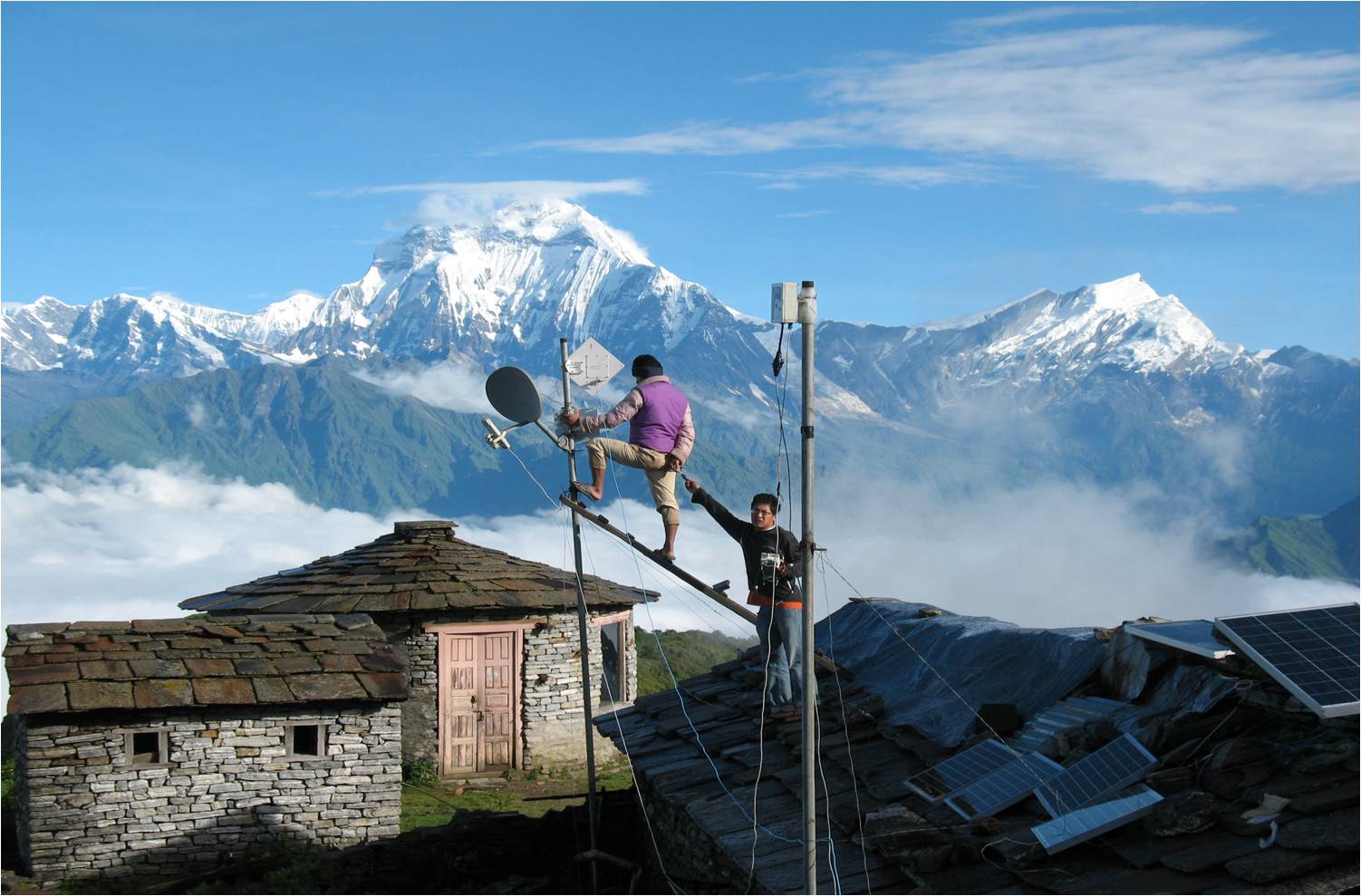
Why are consumers suffering even though 4G service has been expanded for years? Khanal points to two main technical and policy reasons behind this.
According to him, towers have a certain capacity and geographical limit. 'The higher the frequency at which the service is operated, the shorter the signal reach,' he says, 'There is no space to install towers in Kathmandu. People are afraid to allow towers to be installed on their houses after the 2072 earthquake.'
While the problem of signals being blocked by buildings in cities and networks not being received in low-lying areas is technical, he believes the government is not serious about solving it. He suggests that if the government allows towers to be installed on its government buildings under the Right of Way policy, the network problem in cities will be 50 percent resolved.
According to Khanal, the most serious issue is that the government is holding onto sufficient frequency without distributing it to service providers. He says, 'The 1800 MHz band is considered most effective for 4G. There is 75 MHz available there, but the authority has only distributed 40 MHz. Why has the government kept the remaining 35 MHz idle? This is causing weak internet speed. It is a suicidal policy where the state loses revenue by providing substandard service to the public.'
While there are discussions about 5G testing in Nepal, Khanal considers it an unnecessary luxury at present. He comments that it is foolish for companies and the government, which cannot even manage the 4G infrastructure, to talk about 5G.
_57lrmSf0rg.jpg)
'High frequencies like 3300 MHz are needed to run 5G, which has a very short reach. For this, a tower needs to be installed every 200 to 300 meters. Is it possible to install a tower every 200 meters in Kathmandu and supply electricity to it?' he questions. He argues that there are no specific industries or applications in Nepal for 5G, and since fiber internet is available in homes and offices, there is no need for 5G while walking on the street. He said, 'Investing in 5G now is like putting money into a sinking area.'
Khanal stated that Nepal's telecommunications policy is stuck in 2069 BS and does not address current needs. 'In 2069 BS, there were six service providers, now there are only two main ones. But the policy has not been changed.' He said. To make telecommunication services cheaper and of better quality, Khanal emphasized adopting an infrastructure sharing model.
- 'Digital Nepal Framework 2.0' in the Implementation Phase
According to Prakash Dawadi, Information Officer of the Department, the government is accelerating preparations to implement the 'Digital Nepal Framework 2.0'. According to him, international bodies like the World Bank and UNDP are providing technical and other support for the project.
Information Officer Dawadi stated that the process of signing memorandums of understanding with various government agencies for the implementation of the framework is currently underway. This framework is expected to further strengthen the necessary infrastructure and policy arrangements for the country's digital transformation.
The Prime Minister's Office is also coordinating on the previously prepared draft and its detailed implementation aspects.
- What Needs to Be Done Now? What Does the Private Sector Say?
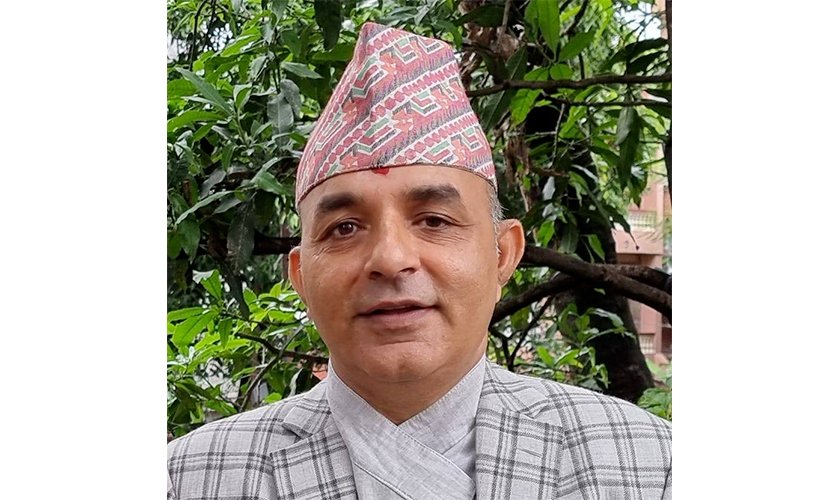
As the government prepares to implement the Digital Nepal Framework 2.0, representatives from the private sector have identified infrastructure development and high costs as the main challenges. Kiran Gautam, General Manager of WorldLink Communications, believes that the government should prioritize internet infrastructure to realize the dream of Digital Nepal.
Gautam stated that the private sector is playing a significant role in making the Digital Nepal concept successful. 'We have expanded fiber in all 77 districts. Even in remote places like Jumla, news and information reach at the same time as in Kathmandu,' he said.
Gautam suggests that the government should develop internet services as essential infrastructure, like electricity transmission lines or roads, to build Digital Nepal. He said that the government should facilitate underground or overhead fiber laying and encourage the private sector.
Gautam informed that the biggest obstacle in service expansion is the pole rent. According to him, while the pole rent was Rs 150 in rural municipalities and Rs 300 in municipalities a few years ago, it has now increased to Rs 7,000 per kilometer.
'It is very difficult for the private sector to expand services in remote areas by paying such high rent,' Gautam added, 'Due to the high rent, we have not been able to bring fiber to Mustang. If the government provides concessions on pole rent, we can provide service in Mustang tomorrow.'
He said that the Digital Nepal Framework focuses on job creation, e-learning, telemedicine, and digital banking. For this, data centers should be established within Nepal, and the electricity tariff for such centers should be reduced. 'The concept of Digital Nepal will be effective only if the cost of data centers in Nepal is reduced,' he said.
He emphasized that the country cannot be truly digital until citizens in Manang and Mustang receive full benefits of digital banking and internet, and stressed the need for the government and private sector to move forward together. Gautam claimed that WorldLink is currently providing internet to many remote areas as part of its social responsibility rather than for commercial gain.
This specific news has been automatically translated by AI. As a result, there may be some inaccuracies or language errors.